


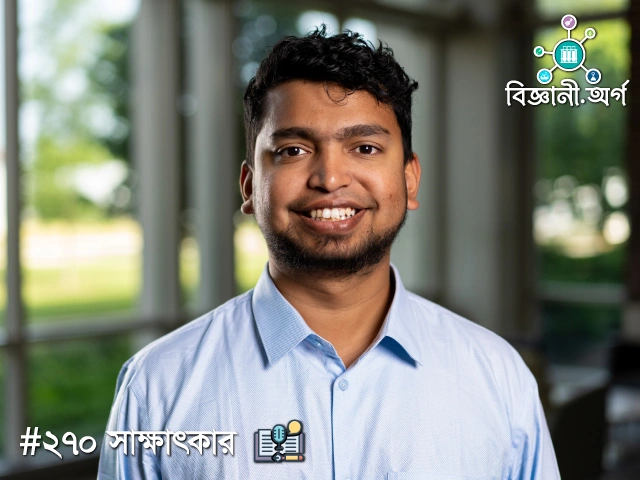
ইমরুল শাহরিয়ার বর্তমানে যুক্তরাষ্ট্রের ইন্ডিয়ানা অঙ্গরাজ্যের ওয়েস্ট লাফায়েটে অবস্থিত Eradivir Inc.-এ Director of Discovery পদে কর্মরত। তাঁর গবেষণার প্রধান ক্ষেত্র প্রি-ক্লিনিক্যাল ড্রাগ ডিসকভারি ও ডেভেলপমেন্ট, বিশেষ করে সংক্রামক রোগ ও ক্যানসারের চিকিৎসায় লিগ্যান্ড-টার্গেটেড ইমিউনোথেরাপি। Eradivir-এ তিনি BAiT প্ল্যাটফর্মের গবেষণা ও নতুন ওষুধ প্রার্থী শনাক্তকরণে কাজ করছেন। তাঁর প্রোফাইলে ইনফ্লুয়েঞ্জার বিরুদ্ধে একটি নতুন থেরাপিউটিক এজেন্টকে ধারণা থেকে ক্লিনিক্যাল পর্যায়ে নিয়ে যাওয়ার গবেষণার উল্লেখ রয়েছে।
তিনি ঢাকা বিশ্ববিদ্যালয়ের রসায়ন বিভাগ থেকে স্নাতক সম্পন্ন করেন এবং ২০১৯–২০২৩ সময়ে Purdue University থেকে Chemistry বিষয়ে পিএইচডি অর্জন করেন। পিএইচডি শেষে Purdue University-তে Postdoctoral Research Associate হিসেবে কাজ করেন। তাঁর গবেষণায় in silico, in vitro এবং in vivo পদ্ধতির পাশাপাশি ছোট অণুভিত্তিক bispecific immune cell tether নিয়ে কাজের অভিজ্ঞতা রয়েছে।

💬 প্রশ্নোত্তর পর্ব:
প্রশ্ন: প্রথমেই আপনার সম্বন্ধে আমরা জানতে চাই।
উত্তর: আমার জন্ম এবং বেড়ে ওঠা বাংলাদেশের চট্টগ্রাম শহরে। পড়াশোনায় হাতেখড়ি পাহাড়তলীর সেন্ট জেভিয়ার্স স্কুল এবং পরবর্তীতে হালিশহরের সিলভার বেলস কিন্ডারগার্টেনে প্রাথমিক পর্যায়ের পড়াশোনা। মাধ্যমিক চট্টগ্রাম কলেজিয়েট স্কুল থেকে এবং উচ্চ মাধ্যমিক ঢাকার রাজউক উত্তরা মডেল কলেজ থেকে। এরপর স্নাতক পর্যায়ের পড়াশোনা ঢাকা বিশ্ববিদ্যালয়ের রসায়ন বিভাগে। ২০১৯ সালে পিএইচডি করার জন্য যোগ দিই যুক্তরাষ্ট্রের ইন্ডিয়ানা অঙ্গরাজ্যে অবস্থিত পার্ডু বিশ্ববিদ্যালয়ের রসায়ন বিভাগে অধ্যাপক ফিলিপ লাওয়ের অধীনে। ২০২৩ সালে পিএইচডি সম্পন্ন করে লাও রিসার্চ ল্যাবরেটরিতেই পোস্ট-ডক্টরাল রিসার্চ অ্যাসোসিয়েট হিসেবে কাজ চালিয়ে যাই এবং পাশাপাশি অধ্যাপক ফিলিপ লাওয়ের প্রতিষ্ঠিত স্টার্টআপ কোম্পানি ইরাডিভিরে রিসার্চ কনসালট্যান্ট হিসেবে যোগ দিই। কয়েক মাস পরেই পুরোপুরি বিজ্ঞানী হিসেবে ইরাডিভিরে যোগ দিই এবং বর্তমানে ডিরেক্টর অব ডিসকভারি পদে কর্মরত আছি। আমার কাজ হলো রসায়ন ও জীববিজ্ঞানের জ্ঞানকে কাজে লাগিয়ে নিত্যনতুন ওষুধ আবিষ্কার এবং সেগুলোকে মানুষের দোরগোড়ায় নিয়ে যাওয়ার নিরলস প্রচেষ্টা।
প্রশ্ন: আপনার গবেষণার বিষয় কী?
উত্তর: আমার গবেষণার বিষয় অ্যান্টিভাইরাল ড্রাগ, অর্থাৎ ভাইরাসনাশক ওষুধ তৈরি করা। ইনফ্লুয়েঞ্জা (ফ্লু) বা RSV-এর মতো যেসব ভাইরাস আমাদের শ্বাসতন্ত্রে সংক্রমণ ঘটায়, সেগুলোকে দ্রুত ধ্বংস করতে পারে এমন নতুন ওষুধ কীভাবে বানানো যায়—সেটাই আমি খুঁজি।
সমস্যাটা কোথায়, সেটা আগে বলি। ফ্লুর জন্য এখন যে ওষুধগুলো আছে (যেমন ট্যামিফ্লু), সেগুলো সাধারণ ফ্লুর ক্ষেত্রে কাজ করে ঠিকই, তবে শর্ত হলো রোগের একেবারে শুরুতে খেতে হবে। সংক্রমণ পুরোনো হয়ে গেলে কার্যকারিতা কমতে থাকে। সম্প্রতি ১৮টি দেশে চালানো REMAP-CAP নামের একটি বড় গবেষণায় দেখা গেছে, রোগ যখন অনেক দূর গড়িয়ে গেছে—অর্থাৎ আইসিইউতে ভর্তি সংকটাপন্ন রোগীদের ক্ষেত্রে—এই ওষুধ আর উপকারে আসে না। এখানে একটি কথা স্পষ্ট করে বলা দরকার: এই ফলাফল কেবল আইসিইউতে থাকা অতি-গুরুতর রোগীদের জন্য প্রযোজ্য। সাধারণ ফ্লুতে চিকিৎসকের পরামর্শে ট্যামিফ্লু ব্যবহার নিয়ে এতে কোনো প্রশ্ন ওঠেনি, তাই কারও নিজে থেকে ওষুধ বন্ধ করার প্রয়োজন নেই—যা করার, চিকিৎসকের পরামর্শেই।
আমার কাছে এর বার্তাটি পরিষ্কার—রোগ বেড়ে যাওয়ার পরও কাজ করবে, এমন একটি ওষুধ এখনো আমাদের হাতে নেই। সেই শূন্যস্থান পূরণ করাই আমার গবেষণার কেন্দ্রবিন্দু।
আমরা যা করেছি তা একটু অন্যরকম। একেবারে শূন্য থেকে নতুন ওষুধ না বানিয়ে, ফ্লুর একটি পুরোনো ও পরিচিত ওষুধকে (জ্যানামিভির) নিয়ে তার গায়ে রাসায়নিকভাবে একটি বাড়তি অংশ জুড়ে দিয়েছি—যাকে আমি মজা করে বলি ওষুধটিকে “ইমিউন সুপারপাওয়ার” দেওয়া। নতুন এই অণুটির নাম EV25।
এটি কাজ করে দুই দিক থেকে একসঙ্গে। ভাইরাসকে যদি লুকিয়ে থাকা শত্রু ধরি, তবে অণুটির পুরোনো অংশটি ভাইরাসকে ধরে তার কাজ করার একটি জরুরি যন্ত্র (নিউরামিনিডেজ নামের এনজাইম) অকেজো করে দেয়। আর নতুন যোগ করা অংশটি ভাইরাস ও ভাইরাসে আক্রান্ত কোষগুলোর গায়ে যেন একটা “চিহ্ন” বা পতাকা লাগিয়ে দেয়। শরীরে আগে থেকেই ঘুরে বেড়ানো প্রতিরক্ষা-সৈনিকেরা (অ্যান্টিবডি ও রোগ প্রতিরোধী কোষ) সেই চিহ্ন দেখে ছুটে এসে শত্রুকে চিনে ফেলে এবং ধ্বংস করে।
এই কৌশলটির নাম আমরা দিয়েছি BAiT—পুরো নাম Bispecific Antigenic immuno-Therapy, বাংলায় বলা যায় “দ্বি-লক্ষ্যভেদী অ্যান্টিজেনভিত্তিক অনাক্রম্য-চিকিৎসা”। নামের প্রতিটি শব্দই ওষুধটির কাজ বুঝিয়ে দেয়। দ্বি-লক্ষ্যভেদী মানে একই অণুর যেন দুটি হাত—এক হাতে ভাইরাসকে ধরে, অন্য হাতে শরীরের প্রতিরক্ষা ব্যবস্থাকে। অ্যান্টিজেন মানে এমন কোনো চিহ্ন, যা দেখে শরীর “শত্রু” বলে চিনে ফেলে; ওষুধটি ভাইরাসের গায়ে ঠিক তেমন একটি চিহ্নই এঁটে দেয়। আর অনাক্রম্য-চিকিৎসা মানে ওষুধ একা না লড়ে শরীরের নিজের রোগ প্রতিরোধ ব্যবস্থাকে দিয়ে কাজটি করিয়ে নেওয়া।
গবেষণাগারে একটি অণু বানিয়ে ফেললেই সেটি ওষুধ হয়ে যায় না। ধাপে ধাপে, প্রতিটি ধাপে নিয়ন্ত্রক কর্তৃপক্ষ ও নীতি-নৈতিকতা কমিটির অনুমোদন নিয়ে প্রমাণ করতে হয় যে সেটি নিরাপদ, তারপর প্রমাণ করতে হয় যে সেটি কার্যকর। EV25-ও এই সিঁড়ি বেয়েই উঠছে।
প্রথম ধাপ—প্রি-ক্লিনিক্যাল গবেষণা, অর্থাৎ মানুষের ওপর যাওয়ার আগের পরীক্ষা। অণুটির জন্ম যুক্তরাষ্ট্রের ইন্ডিয়ানা অঙ্গরাজ্যের ওয়েস্ট লাফায়েত শহরে, পার্ডু বিশ্ববিদ্যালয়ে অধ্যাপক ফিলিপ লাওয়ের গবেষণাগারে—সেখানেই আমার পিএইচডির কাজ। গবেষণাগারের পরীক্ষা ও প্রাণীর ওপর পরীক্ষায় দেখা গেল, নাকের ভেতর মাত্র এক ডোজ দিলে ২৪ ঘণ্টার মধ্যেই ভাইরাস আর খুঁজে পাওয়া যায় না, আর সংক্রমণের ৯৬ ঘণ্টা পরে দিলেও এটি কাজ করে। প্রচলিত ওষুধের তুলনায় এটি দ্রুত ভাইরাস কমায়, রোগের লক্ষণ এবং ফুসফুসের প্রদাহও কমায়। এই ফলাফল ২০২৪ সালে PNAS-এ প্রকাশিত হয়।
দ্বিতীয় ধাপ—ফেজ ১, মানুষের ওপর প্রথম পরীক্ষা। এই ধাপে ওষুধটি কাজ করে কি না তা দেখা হয় না; দেখা হয় শুধু একটি বিষয়—এটি মানুষের জন্য নিরাপদ তো? অল্প কয়েকজন সুস্থ স্বেচ্ছাসেবককে ওষুধ দেওয়ার পর স্বাধীন চিকিৎসকদের একটি নিরাপত্তা কমিটি পর্যালোচনা করে রায় দেন, EV25 মানুষের শরীর ভালোভাবেই সহ্য করছে।
তৃতীয় ধাপ—ফেজ ২এ, “চ্যালেঞ্জ স্টাডি”। ফ্লু-মৌসুমের অপেক্ষায় না থেকে কিছু সুস্থ স্বেচ্ছাসেবককে হাসপাতালে রেখে দুর্বল করা (attenuated) H3N2 ফ্লু ভাইরাস দেওয়া হয়, তারপর ওষুধ প্রয়োগ করে ফলাফল পর্যালোচনা করা হয়। এটি চিকিৎসাবিজ্ঞানে বহু বছর ধরে ব্যবহৃত একটি স্বীকৃত পদ্ধতি এবং এর প্রতিটি ধাপ কঠোরভাবে নিয়ন্ত্রিত।
২০২৫ সালে পাওয়া ফলাফল আমাদের প্রত্যাশা ছাড়িয়ে গেছে—নাকে মাত্র এক ডোজ (৩০০ মিলিগ্রাম) দেওয়ার পর প্লাসিবোর তুলনায় শরীরে ভাইরাসের মোট পরিমাণ কমেছে ৯৮ শতাংশ, উপসর্গের তীব্রতা ও স্থায়িত্ব দুটোই উল্লেখযোগ্যভাবে কমেছে, আর সংক্রমণ ফুসফুসের দিকে নেমে যাওয়ার হার ৮৫.৭ শতাংশ থেকে নেমে এসেছে ৩৫.৭ শতাংশে।
চতুর্থ ধাপ—ফেজ ২, স্বাভাবিকভাবে আক্রান্ত রোগীদের ওপর। এই প্রশ্নের উত্তর খোঁজার কাজটি হচ্ছে বাংলাদেশেই, আন্তর্জাতিক গবেষণা প্রতিষ্ঠান আইসিডিডিআর,বির সঙ্গে যৌথভাবে; ২০২৬ সালের জুলাই মাসে প্রথম রোগীকে ওষুধটি দেওয়া হয়েছে। এবার ওষুধটি দেওয়া হচ্ছে ত্বকের নিচে ইনজেকশনের মাধ্যমে, তিনটি ভিন্ন মাত্রায়, এবং তুলনা করা হচ্ছে প্লাসিবো ও ট্যামিফ্লু—দুটোর সঙ্গেই। অর্থাৎ এখানে শুধু “ওষুধটি কাজ করে কি না” তা নয়, “প্রচলিত ওষুধের চেয়ে ভালো কাজ করে কি না”—সেটিও যাচাই হচ্ছে। এই ধাপগুলো পেরোনোর পরই কেবল একটি ওষুধ অনুমোদনের জন্য বিবেচিত হতে পারে; অর্থাৎ পথ এখনো কিছুটা বাকি, তবে আমরা আশাবাদী।
পাশাপাশি এই একই কৌশল অন্য রোগেও কাজে লাগানোর চেষ্টা চলছে। শিশুদের জন্য বিপজ্জনক RSV ভাইরাসের বিরুদ্ধে EV148 নামের একটি নতুন অণু তৈরি হয়েছে, আর আমি বর্তমানে কাজ করছি এই “টোপ গেঁথে প্রতিরক্ষা-বাহিনী ডেকে আনার” কৌশলটি ক্যানসারের চিকিৎসায় ব্যবহার করা যায় কি না—সেই খোঁজে।
প্রশ্ন: আপনার গবেষণার কাজগুলো কীভাবে আমাদের উপকৃত করছে কিংবা করবে?
উত্তর: এই প্রশ্নের উত্তর দিতে গেলে প্রথমেই একটা ভুল ধারণা ভাঙতে হয়। আমরা অনেকেই ফ্লু বা ইনফ্লুয়েঞ্জাকে “সামান্য সর্দিজ্বর” ভাবি—কয়েক দিন ভুগে আপনাআপনি সেরে যায়। সুস্থ-সবল তরুণদের জন্য কথাটা অনেকাংশে সত্যিও। কিন্তু সংখ্যাগুলোর দিকে তাকালে ছবিটা বদলে যায়।
আমাদের গবেষণা কীভাবে উপকারে আসতে পারে, সেটি কয়েকটি ভাগে বলি।
এক, চিকিৎসা শুরুর সময়সীমা বাড়ানো। এটিই সবচেয়ে বড় ব্যবহারিক সুবিধা। প্রচলিত ফ্লুর ওষুধ কাজ করতে হলে উপসর্গ শুরুর এক-দুই দিনের মধ্যে খেতে হয়। কিন্তু বাস্তবে, বিশেষ করে আমাদের দেশে, কজন মানুষ জ্বরের প্রথম দিনেই ডাক্তারের কাছে যান? বেশির ভাগই যান তিন-চার দিন পর, যখন কষ্ট বেড়ে গেছে—আর ততক্ষণে ওষুধের সবচেয়ে কার্যকর সময়টুকু পেরিয়ে গেছে। আমাদের ওষুধটি প্রাণীর ওপর পরীক্ষায় সংক্রমণের ৯৬ ঘণ্টা পরেও কাজ করেছে। যদি মানুষের ক্ষেত্রেও এটি প্রমাণিত হয়, তার মানে দাঁড়াবে—দেরিতে ডাক্তারের কাছে পৌঁছানো রোগীর জন্যও একটি কার্যকর চিকিৎসা থাকবে।
দুই, রোগ ফুসফুস পর্যন্ত নামা ঠেকানো। ফ্লুতে মানুষ সাধারণত জ্বর-সর্দিতে মারা যান না; বিপদ ঘটে যখন সংক্রমণ নাক-গলা ছাড়িয়ে ফুসফুসে নেমে নিউমোনিয়া তৈরি করে। বেলজিয়ামে করা আমাদের পরীক্ষায় দেখা গেছে, সংক্রমণ নিচের শ্বাসতন্ত্রে নেমে যাওয়ার হার ৮৫.৭ শতাংশ থেকে নেমে এসেছে ৩৫.৭ শতাংশে।
তিন, এক ডোজেই কাজ। পরীক্ষায় ওষুধটি একবার প্রয়োগেই ফল দিয়েছে, পাঁচ দিন ধরে নিয়ম করে খাওয়ার প্রয়োজন হয়নি।
চার, একটি ওষুধ নয়, একটি কৌশল। আমরা যা বানিয়েছি তা কেবল ফ্লুর একটি ওষুধ নয়, বরং একটি সাধারণ পদ্ধতি—রোগজীবাণুর গায়ে “চিহ্ন” এঁটে দিয়ে শরীরের নিজস্ব প্রতিরক্ষা-বাহিনীকে ডেকে আনা। একবার পদ্ধতিটি কাজ করে বলে প্রমাণিত হলে সেটি অন্য রোগেও প্রয়োগ করা যায়। ইতিমধ্যে শিশুদের জন্য বিপজ্জনক RSV ভাইরাসের বিরুদ্ধে একই কৌশলে EV148 নামের একটি অণু তৈরি হয়েছে, আর আমি নিজে দেখছি এটি ক্যানসারের চিকিৎসায় কাজে লাগানো যায় কি না।
পাঁচ, বাংলাদেশের জন্য বাড়তি একটি প্রাপ্তি। এবার একটি আন্তর্জাতিক মানের নতুন ওষুধের গবেষণা হচ্ছে বাংলাদেশেই, আইসিডিডিআর,বির সঙ্গে যৌথভাবে। এর ফলে আমাদের নিজেদের জনগোষ্ঠীর ওপর ওষুধটি কেমন কাজ করে সেই তথ্য পাওয়ার পাশাপাশি আমাদের চিকিৎসক, নার্স ও গবেষকেরা আন্তর্জাতিক মানদণ্ডে ক্লিনিক্যাল ট্রায়াল পরিচালনার হাতে-কলমে অভিজ্ঞতা অর্জন করছেন।
তবে একটি কথা সততার সঙ্গে বলে রাখা দরকার। EV25 এখনো অনুমোদিত ওষুধ নয়, বাজারেও আসেনি। বাকি ধাপগুলো সফল হলে তবেই এটি রোগীর হাতে পৌঁছাবে, আর তাতে আরও কয়েক বছর লাগবে। বিজ্ঞানে অনেক প্রতিশ্রুতিশীল অণুই শেষ ধাপে গিয়ে ব্যর্থ হয়—এটাই এই কাজের নিয়ম। তাই আমি প্রতিশ্রুতি দিচ্ছি না, বলছি সম্ভাবনার কথা।
শিক্ষার্থীদের জন্য শেষে একটা কথা যোগ করি। উপকারটা শুধু ওষুধেই সীমাবদ্ধ নয়। আমাদের কাজটি দেখিয়ে দেয়, একেবারে নতুন কিছু আবিষ্কার না করেও—পুরোনো একটি ওষুধকে বুদ্ধি খাটিয়ে নতুন করে সাজিয়েই—বড় সমস্যার সমাধান বের করা যায়। রসায়নের ক্লাসে যে বিক্রিয়াগুলো তোমরা শেখো, সেগুলোই একদিন কারও প্রাণ বাঁচানোর কাজে লাগতে পারে। আমার গবেষণা যদি একজন শিক্ষার্থীকেও এই বিশ্বাসটুকু দিতে পারে, সেটিও কম বড় উপকার নয়।
প্রশ্ন: গবেষণার কাজের বিশেষ কোনো অভিজ্ঞতা কি আমাদের সঙ্গে শেয়ার করবেন?
উত্তর: ২০২৬ সালের ৪ মার্চ সকালে খবরটা পাই—অধ্যাপক ফিলিপ লাও আর নেই। ৭৮ বছর বয়সে তিনি চলে গেলেন। তিনি ছিলেন আমার পিএইচডির তত্ত্বাবধায়ক, আমাদের প্রতিষ্ঠান ইরাডিভিরের সহ-প্রতিষ্ঠাতা ও প্রধান বৈজ্ঞানিক কর্মকর্তা, এবং সবচেয়ে বড় কথা—আমার শিক্ষক।
জীবনের সবচেয়ে গভীর অভিজ্ঞতা কোনটি জিজ্ঞেস করলে আমি তাই এই মানুষটির কথাই বলব; শুধু তাঁর চলে যাওয়ার দিনটির জন্য নয়, তাঁর সঙ্গে কাটানো বছরগুলোর জন্য।
চট্টগ্রাম থেকে ঢাকা বিশ্ববিদ্যালয় হয়ে যখন যুক্তরাষ্ট্রের পার্ডু বিশ্ববিদ্যালয়ে পৌঁছাই, তখন এমন একজন মানুষের গবেষণাগারে জায়গা পাওয়া আমার কাছে প্রায় অবিশ্বাস্য মনে হয়েছিল। কারণ তিনি সাধারণ কোনো অধ্যাপক ছিলেন না। ১৯৭৬ সাল থেকে পার্ডুতে পড়াচ্ছিলেন; তাঁর নামে যুক্তরাষ্ট্রে একশোর বেশি এবং আন্তর্জাতিকভাবে ছয় শতাধিক পেটেন্ট; সাতটি প্রতিষ্ঠান তিনি গড়ে তুলেছিলেন; আর সবচেয়ে গুরুত্বপূর্ণ—তাঁর গবেষণা থেকে জন্ম নেওয়া তিনটি ওষুধ (Pluvicto, Cytalux, Locametz) আজ সত্যি সত্যিই ক্যানসার রোগীদের চিকিৎসায় ব্যবহৃত হচ্ছে।
কিন্তু তাঁর কাছ থেকে আমি যা শিখেছি, তা কোনো কৌশল বা যন্ত্র চালানোর দক্ষতা নয়। শিখেছি প্রশ্ন করতে। নিজের কাজ নিয়ে তিনি একবার বলেছিলেন, “আমি বিশ্বাস করি রোগের চিকিৎসার পথ দেখতে পারার একটি ক্ষমতা হয়তো আমার আছে… আর আমি এটাও বিশ্বাস করি, কষ্ট ও যন্ত্রণা লাঘব করা আমার দায়িত্ব।” কথাটি তাঁর মুখে শোনা কোনো ভাষণ ছিল না, ছিল তাঁর প্রতিদিনের কাজের ধরন। আমার গবেষণাজীবনের কম্পাসটি ওখানেই ঠিক হয়ে গিয়েছিল—প্রশ্নটা “আমি কী আবিষ্কার করলাম” নয়, “এতে কার উপকার হলো”।
আরেকটি জিনিস তাঁর কাছে শেখা: ব্যর্থতাকে গবেষণার অংশ হিসেবে মেনে নেওয়া। EV25-এর পেছনের কাজটিও এক দিনে হয়নি। একটি পরীক্ষার ব্যর্থতা মানে প্রকৃতি একটি উত্তর দিল—”এদিকে নয়”—আর সেটিও তথ্য, সেটিও অগ্রগতি। এই ধৈর্যটুকু না শিখলে আমি চার বছরে পিএইচডি শেষ করতে পারতাম না।
তিনি চলে যাওয়ার চার মাস পর, ২০২৬ সালের জুলাইয়ে, বাংলাদেশে EV25-এর প্রথম রোগীকে ওষুধটি দেওয়া হয়। সেদিন আমার বারবার তাঁর কথা মনে হচ্ছিল। যে অণুটি তাঁর গবেষণাগারে জন্ম নিয়েছিল, সেটি পৌঁছে গেছে আমার দেশের একজন মানুষের কাছে—অথচ তিনি সেটি দেখে যেতে পারলেন না। এটিই বোধ হয় বিজ্ঞানের সবচেয়ে বড় সান্ত্বনা এবং সবচেয়ে বড় বিষাদ, দুটোই একসঙ্গে: একজন বিজ্ঞানী চলে যান, কিন্তু তাঁর কাজ চলতে থাকে, অন্যদের হাত ধরে, অন্য মহাদেশে।
শিক্ষার্থী বন্ধুদের জন্য এই অভিজ্ঞতা থেকে দুটি কথা বলতে চাই। প্রথমত, একজন ভালো শিক্ষকের সান্নিধ্য জীবনের গতিপথ বদলে দিতে পারে—তাই সুযোগ পেলে এমন মানুষের কাছে যাওয়ার চেষ্টা কোরো, যিনি তোমাকে শুধু বিষয় নয়, দৃষ্টিভঙ্গি শেখাবেন। দ্বিতীয়ত, তিনি আমাকে শিখিয়েছিলেন—গবেষণা কোনো একক দৌড় নয়, এটি একটি রিলে রেস। কেউ একজন লাঠিটা তোমার হাতে তুলে দেন, তুমি নিজের দূরত্বটুকু দৌড়াও, তারপর পরের জনের হাতে দিয়ে যাও। অধ্যাপক লাও তাঁর অংশটুকু দৌড়ে গেছেন। এখন লাঠিটা আমাদের হাতে।
প্রশ্ন: একজন বিজ্ঞানীর কী কী গুণ থাকা প্রয়োজন বলে মনে করেন?
উত্তর: এই প্রশ্নের উত্তরে সাধারণত যা বলা হয়—মেধা, পরিশ্রম, অধ্যবসায়—সেগুলো ঠিকই, কিন্তু একটু গৎবাঁধা। আমি বরং আমার নিজের পথচলা থেকে যা শিখেছি, সেই কথাগুলোই বলি।
এক, প্রশ্ন করার সাহস ও অভ্যাস। কৌতূহল সবারই থাকে, কিন্তু বিজ্ঞানীর কাজ হলো অস্পষ্ট কৌতূহলকে একটি নির্দিষ্ট, পরীক্ষাযোগ্য প্রশ্নে রূপ দেওয়া।
দুই, ব্যর্থতা হজম করার ক্ষমতা। এটিকে আমি সবচেয়ে জরুরি গুণ মনে করি। ওষুধ আবিষ্কারের কাজে হাজারো অণু তৈরি হয়, তার মধ্যে হয়তো একটি ক্লিনিকে পৌঁছায়। একটি ব্যর্থ পরীক্ষা মানে প্রকৃতি একটি উত্তর দিল, “এদিকে নয়”। উত্তরটি তোমার পছন্দ হয়নি, কিন্তু এটিও তথ্য, এটিও অগ্রগতি।
তিন, সব ধরনের সততা—তথ্যের কাছে, নিজের অজ্ঞতার কাছে এবং নীতির কাছে। আমার মতে এই তিনটি আসলে একই গুণের তিনটি চেহারা, আর এটিই বিজ্ঞানের মেরুদণ্ড।
প্রথমত, নিজের প্রিয় ধারণাটিকেও ভুল প্রমাণ করার সততা। তাই নিজের ফলাফল যখন নিজের প্রত্যাশার সঙ্গে হুবহু মিলে যায়, তখনই সবচেয়ে বেশি সতর্ক হওয়া দরকার।
দ্বিতীয়ত, “আমি জানি না” বলতে পারার সততা—আর সেটিই মানুষকে নিজের বিষয়ের বাইরে শিখতে শেখায়। আমি রসায়নের ছাত্র, কিন্তু EV25 বানাতে গিয়ে আমাকে শিখতে হয়েছে ইমিউনোলজি, ভাইরোলজি, প্রাণীর ওপর পরীক্ষার নিয়মকানুন, এমনকি ওষুধ নিয়ন্ত্রক সংস্থার আইনও। বড় সমস্যাগুলো কোনো একটি বিভাগের সীমানার ভেতরে থাকে না।
তৃতীয়ত, নৈতিক সততা। আমাদের কাজ শেষ পর্যন্ত মানুষের শরীর নিয়ে। তাই তথ্য সাজিয়ে-গুছিয়ে সুন্দর দেখানোর প্রলোভন, বা অসুবিধাজনক ফলাফল চেপে যাওয়ার প্রলোভন—এগুলোকে না বলতে পারতে হয়।
চার, “এতে কার উপকার হবে?”—এই প্রশ্নটি সঙ্গে রাখা। প্রকাশনা ও স্বীকৃতি গবেষকের জীবনে দরকার, কিন্তু সেগুলো লক্ষ্য নয়, পথের মাইলফলক।
পাঁচ, সহজ ভাষায় বোঝাতে পারার ক্ষমতা। অনেক তরুণ গবেষক ভাবেন, কঠিন পরিভাষা ব্যবহার করলে কাজটি গুরুগম্ভীর শোনায়। বাস্তবে উল্টোটা—যিনি বিষয়টি সত্যিই বুঝেছেন, তিনিই সহজ করে বলতে পারেন।
ছয়, দলে কাজ করার মানসিকতা ও বিনয়। একটি ওষুধ রোগীর কাছে পৌঁছাতে লাগে রসায়নবিদ, জীববিজ্ঞানী, চিকিৎসক, পরিসংখ্যানবিদ, নার্স, নিয়ন্ত্রক বিশেষজ্ঞ—এবং সবচেয়ে বড় কথা, ট্রায়ালে অংশ নেওয়া স্বেচ্ছাসেবক ও রোগীরা। এঁদের প্রত্যেকের অবদান সমান জরুরি।
শেষে আমাদের দেশের শিক্ষার্থীদের জন্য একটি বাস্তব পরামর্শ। অনেকেই ভাবেন, গবেষণা শুরু করতে ঝকঝকে গবেষণাগার আর দামি যন্ত্র লাগে। ভালো প্রশ্ন, একটু পড়াশোনা আর কয়েকজন আগ্রহী সঙ্গী—শুরুর জন্য এটুকুই যথেষ্ট। যন্ত্র পরে জোটে; কৌতূহল ও অভ্যাসটা আগে তৈরি করতে হয়।
আর ধৈর্য রেখো। বিজ্ঞান দ্রুত ফল দেয় না। যে অণু নিয়ে আমি পিএইচডিতে কাজ শুরু করেছিলাম, সেটি রোগীর শরীরে পৌঁছাতে এক দশকের কাছাকাছি সময় লেগেছে—এবং এখনো পথ বাকি। কিন্তু এই ধীর কাজটিই একদিন কারও প্রাণ বাঁচায়। সেই সম্ভাবনার জন্য অপেক্ষা করা যায়।
প্রশ্ন: বাংলাদেশের তরুণ শিক্ষার্থীরা যারা বিজ্ঞানে কাজ করতে চায়—তাদের জন্য আপনার কোনো বার্তা আছে কি?
উত্তর: বাংলাদেশে বসে কি বিশ্বমানের গবেষণা সম্ভব? এই প্রশ্নটাই তরুণদের সবচেয়ে বেশি আটকে রাখে। আমার উত্তর—সম্ভব। আমাদের ঘাটতি মেধায় নয়, আত্মবিশ্বাসে।
অনেকে অপেক্ষা করে—মাস্টার্স শেষ হোক, বিদেশে যাই, বড় ল্যাব পাই, তারপর শুরু করব। এই অপেক্ষাটাই ফাঁদ। গবেষণা মানে দামি যন্ত্র নয়, একটি ভালো প্রশ্ন আর তার পেছনে লেগে থাকা।
“না” শুনতে অভ্যস্ত হও। বৃত্তির আবেদন বাতিল হবে, ইমেইলের উত্তর আসবে না, পরীক্ষা বারবার ব্যর্থ হবে। পার্থক্য গড়ে দেয় একটাই জিনিস—তুমি পরের আবেদনটি করলে কি না।
বিজ্ঞান প্রতিভাবানদের ক্লাব নয়; এটি একটি অভ্যাস—প্রশ্ন করার, যাচাই করার, ভুল হলে স্বীকার করে আবার শুরু করার অভ্যাস।
পথটা তোমার জন্যও খোলা। শুরু করো আজই, যেখানে আছ সেখান থেকেই।
🔗 প্রোফাইল লিংক:
🔗 LinkedIn: linkedin.com/in/imrulshahriar
🌐 Eradivir: eradivir.com/company/#history
📧 ইমেইল: [email protected]
ইমরুল শাহরিয়ারের গবেষণার পথচলায় রসায়ন, জীববিজ্ঞান ও ওষুধ আবিষ্কারের সমন্বিত প্রয়োগের একটি স্পষ্ট দিক তুলে আসে। EV25-এর গবেষণাগার থেকে ক্লিনিক্যাল পর্যায়ে অগ্রসর হওয়ার প্রক্রিয়া দেখায়, একটি সম্ভাবনাময় অণুকে রোগীর কাছে পৌঁছাতে দীর্ঘ সময় ধরে বৈজ্ঞানিক যাচাই প্রয়োজন। একই সঙ্গে তাঁর গবেষণায় বাংলাদেশে ক্লিনিক্যাল গবেষণার সম্পৃক্ততাও একটি গুরুত্বপূর্ণ দিক। তরুণ শিক্ষার্থীদের জন্য তাঁর প্রশ্ন করার, ব্যর্থতা থেকে শেখার এবং ধৈর্য ধরে এগিয়ে যাওয়ার বার্তাটি গবেষণামুখী পথচলায় সহায়ক হতে পারে। বিজ্ঞানী.অর্গ টিম ইমরুল শাহরিয়ারের গবেষণার ধারাবাহিক সাফল্য কামনা করছে।
Combining Chemistry and Biology to Discover New Medicines: Imrul Shahriar
Imrul Shahriar is currently serving as Director of Discovery at Eradivir Inc. in West Lafayette, Indiana, United States. His research focuses on pre-clinical drug discovery and development, particularly ligand-targeted immunotherapies for infectious diseases and oncology. He has experience in designing and conducting in silico, in vitro, and in vivo studies to evaluate drug candidates, including their efficacy, safety, and pharmacological properties. His work includes the development of small-molecule-based bispecific immune cell tethers for therapeutic applications. He has also been involved in advancing a novel therapeutic agent against influenza from the research stage toward clinical evaluation.
Imrul Shahriar completed his Bachelor of Science in Chemistry at the University of Dhaka and earned his PhD in Chemistry from Purdue University, where he studied from 2019 to 2023. Following his PhD, he worked as a Postdoctoral Research Associate at Purdue University before joining Eradivir in research and drug discovery roles. His professional experience also includes computational chemistry, pre-clinical studies, and machine-learning applications in drug discovery.
💬 Interview
Question: First, please tell us about yourself.
Answer: I was born and raised in Chattogram, Bangladesh. I began my early education at St. Xavier’s School in Pahartali and later attended Silver Bells Kindergarten in Halishahar. I completed my secondary education at Chittagong Collegiate School and higher secondary education at RAJUK Uttara Model College in Dhaka.
I then pursued my undergraduate studies in the Department of Chemistry at the University of Dhaka. In 2019, I joined the Department of Chemistry at Purdue University in Indiana, USA, to pursue my PhD under Professor Philip Low.
After completing my PhD in 2023, I continued working in the Low Research Laboratory as a Postdoctoral Research Associate. At the same time, I joined Eradivir, a startup founded by Professor Philip Low, as a Research Consultant. A few months later, I joined Eradivir full-time as a scientist, and I am currently serving as Director of Discovery.
My work involves using knowledge from chemistry and biology to discover new medicines and make continuous efforts to bring them closer to patients.
Question: What is your research focus?
Answer: My research focuses on antiviral drugs—developing medicines that can destroy or inhibit viruses. I am particularly interested in developing new drugs that can rapidly eliminate respiratory viruses such as influenza and RSV.
Let me first explain the problem. The existing drugs for influenza, such as Tamiflu, can work against typical influenza infections, but they need to be administered very early in the course of the disease. Their effectiveness decreases as the infection progresses. A large study called REMAP-CAP, conducted across 18 countries, recently found that in critically ill patients admitted to intensive care units, these drugs did not provide a significant benefit once the disease had progressed that far.
The message is clear to me: we still do not have a drug that can effectively work after the disease has progressed. Filling this gap is at the center of my research.
Our approach is somewhat different. Instead of developing an entirely new drug from scratch, we took an existing and well-known influenza drug, zanamivir, and chemically attached an additional component to it. I sometimes describe this as giving the drug an “immune superpower.” The new molecule is called EV25.
It works in two ways simultaneously. If we think of the virus as a hidden enemy, the original part of the molecule binds to the virus and disables an essential enzyme called neuraminidase. The newly added component, meanwhile, places a kind of “flag” on the virus and infected cells. The body’s existing defense forces—antibodies and immune cells—recognize that flag and move toward the target to destroy it.
We named this strategy BAiT, which stands for Bispecific Antigenic immuno-Therapy. The name reflects how the drug works. “Bispecific” means that the same molecule has two functions—one part targets the virus while the other engages the body’s immune system. The “antigenic” component provides a recognizable signal, while “immunotherapy” means that the treatment works by engaging the body’s own immune defenses.
There is also a wordplay in the name. The English word “bait” means something used to lure a target. In this case, the drug essentially places a bait on the virus, attracting the body’s immune defenses toward it.
It is important to understand that creating a molecule in the laboratory does not immediately make it a drug. The molecule must go through multiple stages of testing, with regulatory and ethical approvals at each stage, to establish its safety and effectiveness. EV25 is progressing through this process.
The first stage is pre-clinical research, which involves testing before human trials. EV25 originated in Professor Philip Low’s laboratory at Purdue University in West Lafayette, Indiana, where I conducted my PhD research. Laboratory and animal studies showed that a single intranasal dose could eliminate detectable virus within 24 hours, and the treatment remained effective even when administered 96 hours after infection. Compared with conventional treatment, it reduced viral levels more rapidly and decreased disease symptoms and lung inflammation. These findings were published in PNAS in 2024.
The second stage is Phase I, the first human study. At this stage, the primary question is not whether the drug works but whether it is safe for humans. After the drug was administered to a small number of healthy volunteers, an independent medical safety committee reviewed the results and concluded that EV25 was well tolerated.
The third stage is Phase IIa, a controlled “challenge study.” Instead of waiting for the influenza season, healthy volunteers were hospitalized and given an attenuated H3N2 influenza virus. They were then treated and monitored under strict medical supervision. This is an established approach in clinical research, with participants providing informed consent and receiving continuous medical monitoring.
The results obtained in 2025 exceeded our expectations. After a single intranasal dose of 300 mg, the total amount of virus in the body decreased by 98 percent compared with placebo. Both the severity and duration of symptoms were significantly reduced, while the rate of infection progressing to the lower respiratory tract decreased from 85.7 percent to 35.7 percent.
The fourth stage is Phase II in naturally infected patients, which is currently being conducted in Bangladesh in collaboration with icddr,b. The first patient received the drug in July 2026. At this stage, EV25 is administered through a subcutaneous injection at three different dose levels and is being compared with both placebo and Tamiflu.
This means that the study is evaluating not only whether the drug works, but also whether it performs better than an existing treatment. The drug still has several stages to complete before it can potentially receive regulatory approval, but we remain hopeful.
At the same time, we are exploring whether the same strategy can be applied to other diseases. A new molecule called EV148 has been developed against RSV, a virus that can be dangerous for children. I am also currently investigating whether this “bait-and-recruit” immune strategy can be applied to cancer treatment.
Question: How is your research benefiting, or likely to benefit, people?
Answer: Before answering this question, I would first like to address a common misconception. Many people think of influenza as simply a mild cold or fever that goes away after a few days. For healthy young people, that can often be true. But the broader numbers tell a different story.
The people who could benefit most directly from our research are those who are vulnerable to severe influenza.
There are several potential benefits.
First, extending the treatment window. This could be the most important practical advantage. Conventional influenza medicines generally need to be taken within the first one or two days after symptoms appear. But in reality, especially in countries like Bangladesh, many people do not visit a doctor on the first day of illness. They often seek medical care after three or four days, when symptoms have become more severe.
Our drug has remained effective in animal studies even when administered 96 hours after infection. If this is confirmed in humans, it could potentially provide a treatment option for patients who reach medical care later in the course of their illness.
Second, preventing the infection from progressing into the lungs. Influenza becomes particularly dangerous when the infection moves beyond the nose and throat and reaches the lungs, potentially causing pneumonia. In our study in Belgium, the rate of progression to the lower respiratory tract decreased from 85.7 percent to 35.7 percent.
Third, single-dose treatment. The drug produced an effect after a single administration, eliminating the need for a five-day dosing schedule. This could be particularly useful in situations where patients stop taking medication once they begin to feel better.
Fourth, the strategy itself could be more important than a single drug. Our work is not simply about developing one influenza medicine. It represents a broader strategy: placing a recognizable “flag” on a pathogen and using the body’s own immune system to attack it. If this approach is successfully validated, it could potentially be adapted to other diseases.
We have already developed EV148 against RSV using a similar strategy, and I am personally investigating its potential application in cancer treatment.
Fifth, there is an important opportunity for Bangladesh. Drug trials are often conducted primarily in wealthier countries, and countries like Bangladesh may receive new treatments later. This time, however, an international drug-development program is being evaluated in Bangladesh in collaboration with icddr,b. This provides data from our own population while also giving Bangladeshi physicians, nurses, and researchers hands-on experience in conducting clinical trials according to international standards.
However, it is important to be honest about the current stage of development. EV25 is not yet an approved medicine and is not commercially available. It must successfully complete the remaining stages before it can potentially reach patients, and that could take several more years. Many promising molecules fail during drug development. Therefore, I am not making a promise; I am talking about a possibility.
For students, there is another important benefit beyond the drug itself. Our work demonstrates that major problems can sometimes be addressed not by inventing something entirely new, but by intelligently redesigning an existing molecule. The chemical reactions students learn in class can eventually contribute to solutions that save lives. If my research can give even one student confidence in that possibility, that itself is a meaningful contribution.
Question: Could you share a particularly memorable experience from your research career?
Answer: On the morning of March 4, 2026, I received the news that Professor Philip Low had passed away at the age of 78. He was my PhD supervisor, co-founder and Chief Scientific Officer of Eradivir, and, most importantly, my teacher.
If I am asked about the most profound experience of my scientific career, I would talk about this person—not only because of the day he passed away, but because of the years I spent working with him.
When I arrived at Purdue University after studying at the University of Dhaka, being accepted into his laboratory felt almost unbelievable to me. He was not an ordinary professor. He had been teaching at Purdue since 1976, held more than one hundred patents in the United States and more than six hundred internationally, and had founded seven companies. Most importantly, three drugs originating from his research—Pluvicto, Cytalux, and Locametz—are now being used to treat cancer patients.
But what I learned from him was not simply a particular technique or how to operate a piece of equipment. I learned how to ask questions.
He once said about his work, “I believe I may have the ability to see a path toward treating disease… and I also believe it is my responsibility to alleviate suffering.” Hearing those words from him was not like listening to a speech. It reflected the way he worked every day.
That shaped the compass of my research career. The question was no longer simply, “What did I discover?” but rather, “Who will benefit from it?”
I also learned from him to accept failure as part of research. The work behind EV25 did not happen overnight. A failed experiment means that nature has given you an answer: “Not this way.” It is still information, and it is still progress. Without learning that patience, I do not think I could have completed my PhD in four years.
Four months after his passing, in July 2026, the first patient in Bangladesh received EV25. I thought about him repeatedly that day. The molecule that was born in his laboratory had reached a person in my own country, yet he was not there to see it.
Perhaps this is both the greatest comfort and the greatest sadness of science: a scientist eventually leaves, but their work continues through others and across continents.
For students, I would like to share two lessons from this experience. First, the right mentor can change the course of your life. Whenever possible, seek out people who can teach you not only a subject but also a way of thinking.
Second, my teacher taught me that research is not a solo race; it is a relay race. Someone hands the baton to you, you run your part, and then you pass it to the next person. Professor Low ran his part. Now the baton is in our hands.
Question: What qualities do you think a scientist should have?
Answer: The qualities usually mentioned—intelligence, hard work, and perseverance—are certainly important, but they can sound somewhat conventional. I would rather talk about what I have learned from my own journey.
First, the courage and habit of asking questions. Everyone has curiosity, but a scientist must transform vague curiosity into a specific, testable question.
Second, the ability to handle failure. I consider this one of the most important qualities. Thousands of molecules may be developed during drug discovery, and perhaps only one eventually reaches the clinic. A failed experiment means nature has provided an answer: “Not this way.” You may not like the answer, but it is still information and progress.
Third, intellectual, personal, and ethical honesty. To me, these are three aspects of the same quality, and they form the backbone of science.
Scientists need the honesty to prove their own favorite ideas wrong. They also need the honesty to say, “I don’t know.” That willingness encourages us to learn beyond our own disciplines.
I am a chemistry student, but while developing EV25, I had to learn immunology, virology, regulations governing animal studies, and even pharmaceutical regulatory frameworks. Major problems rarely fit neatly within the boundaries of a single discipline.
The third aspect is ethical integrity. Our work ultimately involves human health. We must be able to resist the temptation to make data look better than they are or to hide inconvenient results.
Fourth, keep asking, “Who will benefit from this?” Publications and recognition are important milestones in a researcher’s career, but they should not become the ultimate goal.
Fifth, the ability to communicate complex ideas in simple language. Many young researchers believe that using difficult terminology makes their work sound more sophisticated. In reality, the opposite is often true. Someone who truly understands a subject can explain it clearly.
Sixth, teamwork and humility. The era of the lone scientist is largely over. Bringing a medicine to patients requires chemists, biologists, physicians, statisticians, nurses, regulatory experts, and, most importantly, volunteers and patients who participate in clinical trials. Every contribution matters.
Finally, I would like to offer a practical piece of advice to students in Bangladesh. Many people think that research requires a sophisticated laboratory and expensive equipment. In reality, a good question, some reading, and a few motivated collaborators are enough to get started. Equipment can come later; curiosity and good habits must come first.
And be patient. Science does not produce results quickly. The molecule I started working on during my PhD took nearly a decade to reach a patient’s body—and there is still a long way to go. But this slow process may one day save someone’s life. That possibility is worth waiting for.
Question: What message would you like to give to young Bangladeshi students who want to pursue science?
Answer: Can world-class research be done while living in Bangladesh? This is the question that holds many young people back. My answer is—yes, it is possible. Our limitation is not a lack of talent; it is often a lack of confidence.
Many people wait until they finish their master’s degree, go abroad, or get access to a major laboratory before they begin. That waiting can become a trap. Research does not begin with expensive equipment. It begins with a good question and the determination to pursue it.
Get used to hearing “no.” Scholarship applications will be rejected, emails will go unanswered, and experiments will fail repeatedly. What makes the difference is whether you submit the next application and continue the next experiment.
Science is not a club for exceptionally talented people; it is a habit—the habit of asking questions, testing ideas, admitting mistakes, and starting again.
The path is open to you too. Start today, wherever you are.
🔗 Profile Links
🔗 LinkedIn: https://www.linkedin.com/in/imrulshahriar/
🌐 Eradivir: https://eradivir.com/company/#history
📧 Email: [email protected]
Imrul Shahriar’s research journey demonstrates how chemistry, biology, and drug discovery can come together to address important challenges in human health. The development of EV25, from laboratory research toward clinical evaluation, illustrates the long and rigorous process required to transform a promising molecule into a potential medicine. His work also highlights the growing role of Bangladesh in international clinical research. For young students, his emphasis on asking questions, learning from failure, maintaining scientific integrity, and pursuing research with patience offers valuable guidance. The Biggani.org team wishes Imrul Shahriar continued success in his research and drug-discovery journey.




Leave a comment