


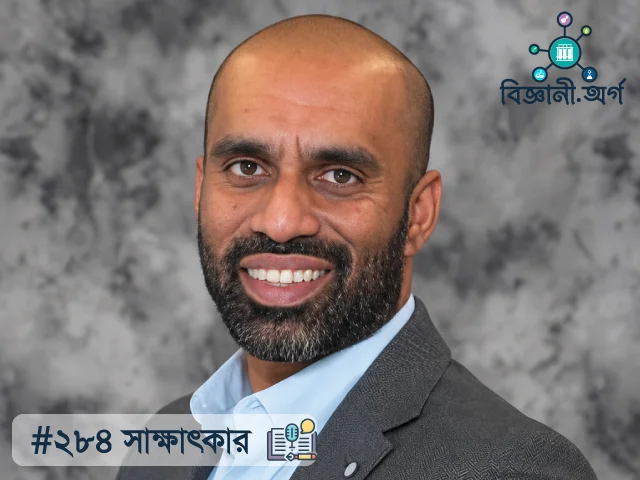
চট্টগ্রামের স্কুলজীবন, বুয়েটে প্রকৌশল শিক্ষা, যুক্তরাষ্ট্রে উচ্চশিক্ষা এবং পরবর্তী সময়ে বৈজ্ঞানিক সফটওয়্যার ও জৈবচিকিৎসা গবেষণার প্রযুক্তি উন্নয়ন—সামিউল বশির সামীর কর্মজীবন নানা শাখার জ্ঞানকে একসঙ্গে কাজে লাগানোর এক অনন্য উদাহরণ। বিজ্ঞানী.অর্গ-এর বিশেষ সাক্ষাৎকারে তিনি তুলে ধরেছেন তাঁর গবেষণাযাত্রা, গণিতের প্রতি ভালোবাসা, ওষুধ আবিষ্কারে কৃত্রিম বুদ্ধিমত্তার ভূমিকা এবং বাংলাদেশের তরুণদের জন্য ভবিষ্যৎ প্রস্তুতির দিকনির্দেশনা।
একটি সাধারণ টিস্যু পেপার কেন অন্যটির তুলনায় বেশি পানি শোষণ করে? কিংবা টিস্যুর রোল থেকে একটি অংশ টান দিলে সেটি নির্দিষ্ট রেখা বরাবর সহজে ছিঁড়ে যায়, অথচ কারখানায় তৈরির সময় একই কাগজ কেন ছিঁড়ে যায় না?

দৈনন্দিন জীবনের এমন সাধারণ প্রশ্নের পেছনেও লুকিয়ে আছে গণিত, পদার্থবিজ্ঞান ও প্রকৌশলের জটিল হিসাব। যুক্তরাষ্ট্রে বৈজ্ঞানিক গণনা, কৃত্রিম বুদ্ধিমত্তা ও জৈবচিকিৎসা গবেষণার প্রযুক্তি নিয়ে কাজ করা সামিউল বশির সামী মনে করেন, বিজ্ঞানের প্রকৃত সৌন্দর্য এখানেই। আমরা প্রতিদিন যেসব বস্তু ব্যবহার করি, সেগুলোর নকশা থেকে শুরু করে আধুনিক ওষুধ আবিষ্কার—সবখানেই রয়েছে বৈজ্ঞানিক চিন্তা ও সমস্যা সমাধানের প্রয়োগ।
বর্তমানে তিনি যুক্তরাষ্ট্রের Axle Informatics-এ Engineering Manager, Scientific Computing, AI & Data Platforms হিসেবে কর্মরত। তাঁর কাজের মাধ্যমে যুক্তরাষ্ট্রের ন্যাশনাল ইনস্টিটিউটস অব হেলথ (NIH)-এর অন্তর্গত ন্যাশনাল সেন্টার ফর অ্যাডভান্সিং ট্রান্সলেশনাল সায়েন্সেস (NCATS)-এর গবেষণা কার্যক্রমে প্রযুক্তিগত সহায়তা দেওয়া হয়।
বিজ্ঞানী.অর্গ-এর বিশেষ অনলাইন সাক্ষাৎকারে তিনি নিজের জীবনের নানা অভিজ্ঞতার পাশাপাশি আলোচনা করেছেন বিজ্ঞানশিক্ষা, গণিত, স্বাস্থ্যসেবায় তথ্যপ্রযুক্তি, কৃত্রিম বুদ্ধিমত্তা এবং আগামী দিনের গবেষকদের প্রস্তুতি নিয়ে।
চট্টগ্রাম থেকে বুয়েট, তারপর যুক্তরাষ্ট্র
সামিউল বশির সামীর শিক্ষাজীবনের শুরু চট্টগ্রামে। তিনি পড়াশোনা করেছেন চট্টগ্রাম কলেজিয়েট স্কুল ও চট্টগ্রাম কলেজে। স্কুল-কলেজের সময় থেকেই বিজ্ঞান তাঁর আগ্রহের বিষয় হলেও ভবিষ্যতে ঠিক কোন পেশায় যাবেন, তা নিয়ে শুরুতে নির্দিষ্ট কোনো পরিকল্পনা ছিল না।
তাঁর ভাষায়, সেই সময় অনেক সিদ্ধান্তই নেওয়া হতো বন্ধু ও বড় ভাইদের পথ অনুসরণ করে। আশপাশের বন্ধুরা প্রকৌশল বিশ্ববিদ্যালয়ে ভর্তি হওয়ার প্রস্তুতি নিচ্ছিলেন। তিনিও তাঁদের সঙ্গে বাংলাদেশ প্রকৌশল বিশ্ববিদ্যালয়ের (বুয়েট) ভর্তি পরীক্ষায় অংশ নেন এবং মেকানিক্যাল ইঞ্জিনিয়ারিং বিভাগে ভর্তি হন।
বুয়েটে পড়ার সময় আরেকটি বিষয় তাঁর নজরে আসে। অনেক জ্যেষ্ঠ শিক্ষার্থী উচ্চশিক্ষার জন্য বিদেশে যাচ্ছেন। তাঁদের দেখে তিনিও বিদেশে পড়াশোনার কথা ভাবতে শুরু করেন। এরপর GRE ও TOEFL-এর প্রস্তুতি নেন এবং বিভিন্ন বিশ্ববিদ্যালয়ে আবেদন করেন।
একাধিক বিশ্ববিদ্যালয়ে সুযোগ পাওয়ার পর তিনি যুক্তরাষ্ট্রের ইউনিভার্সিটি অব সিনসিনাটিকে বেছে নেন। সিদ্ধান্তের পেছনে ছিল দুটি গুরুত্বপূর্ণ কারণ—ভালো বৃত্তির সুযোগ এবং সেখানে কম্পিউটেশনাল মেকানিক্সে দক্ষ গবেষক ও শিক্ষকদের উপস্থিতি।
নিজের এই যাত্রার কথা বলতে গিয়ে তিনি ভাগ্য ও প্রস্তুতির সম্পর্কের ওপর বিশেষ গুরুত্ব দেন।
তাঁর মতে, সুযোগ পাওয়ার জন্য শুধু ভাগ্যের ওপর নির্ভর করলে চলে না। আগে থেকেই প্রস্তুতি থাকতে হয়। অনেক সময় মানুষ এমন কিছু শেখে, যার ভবিষ্যৎ ব্যবহার তখন স্পষ্ট থাকে না। কিন্তু পরবর্তী সময়ে কোনো সুযোগ এলে সেই পূর্বপ্রস্তুতিই এগিয়ে যাওয়ার পথ তৈরি করে।
সামিউল বশির সামীর জীবনেও বারবার এমন ঘটনা ঘটেছে। এক সময় শেখা গণিত, প্রোগ্রামিং বা প্রকৌশলের ধারণা পরবর্তী সময়ে সম্পূর্ণ নতুন গবেষণাক্ষেত্রে কাজে লেগেছে।
গণিত কেন তাঁর কাছে প্রকৃতির ভাষা
শৈশবে পদার্থবিজ্ঞান ও প্রকৌশল—দুটি বিষয়ের প্রতিই তাঁর আগ্রহ ছিল। প্রকৌশলী না হলে হয়তো তিনি পদার্থবিদ বা গণিতবিদ হতেন।
বুয়েটে পড়ার সময় বিশেষভাবে আকৃষ্ট হন ডিফারেনশিয়াল ইকুয়েশন বা অন্তরক সমীকরণের প্রতি। তাঁর কাছে এই গণিতের শাখাটি হয়ে ওঠে প্রকৃতির আচরণ বোঝার এক অসাধারণ মাধ্যম।
কোনো বস্তুর গতি কীভাবে পরিবর্তিত হচ্ছে, সময়ের সঙ্গে তাপমাত্রা কীভাবে বাড়ছে বা কমছে কিংবা কোনো তরল কীভাবে প্রবাহিত হচ্ছে—এসব পরিবর্তনকে গাণিতিকভাবে প্রকাশ করতে অন্তরক সমীকরণ ব্যবহার করা হয়।
ধরা যাক, একটি গরম চায়ের কাপ টেবিলে রাখা হয়েছে। সময়ের সঙ্গে চায়ের তাপমাত্রা কমতে থাকবে। এই পরিবর্তনের হারকে গাণিতিকভাবে বর্ণনা করা যায়। একই ধারণা আরও জটিল রূপে ব্যবহৃত হয় বিমান, গাড়ি, বিদ্যুৎব্যবস্থা ও বৈজ্ঞানিক গবেষণায়।
সামিউল বশির সামীর কাছে গণিতের আকর্ষণ ছিল এমন বাস্তব সমস্যার সঙ্গে এর গভীর সম্পর্ক।
তবে গণিতের সব শাখা যে তাঁর সমান ভালো লাগত, তা নয়। রিয়েল অ্যানালাইসিস বা কমপ্লেক্স অ্যানালাইসিসের তুলনায় অন্তরক সমীকরণ এবং এর ব্যবহারিক প্রয়োগ তাঁকে বেশি আকৃষ্ট করত।
মেকানিক্যাল ইঞ্জিনিয়ারিংয়ে স্নাতকোত্তর পড়াশোনার সময় এই আগ্রহ আরও গভীর হয়।
গবেষণাপত্র বুঝতে আবার বিশ্ববিদ্যালয়ে ফেরা
উচ্চশিক্ষার পর সামিউল বশির সামী যুক্তরাষ্ট্রের প্রযুক্তিপ্রতিষ্ঠান Siemens-এ সফটওয়্যার ইঞ্জিনিয়ার হিসেবে কাজ শুরু করেন। সেখানে তাঁর কাজ ছিল প্রকৌশলের জটিল সমস্যা সমাধানের জন্য বৈজ্ঞানিক সফটওয়্যার তৈরি করা।
বিশেষ করে তিনি ফাইনাইট এলিমেন্ট পদ্ধতি নিয়ে কাজ করতেন।
এই পদ্ধতিতে একটি বড় ও জটিল বস্তুকে অসংখ্য ছোট অংশে ভাগ করে প্রতিটি অংশের আচরণ গণনা করা হয়। যেমন একটি সেতুর ওপর যানবাহনের চাপ পড়লে সেতুর বিভিন্ন অংশে কতটা বল কাজ করবে, তা কম্পিউটারের সাহায্যে বিশ্লেষণ করা সম্ভব।
কিন্তু কাজ করতে গিয়ে তিনি বুঝতে পারেন, আধুনিক গবেষণাপত্রের গভীর গাণিতিক ব্যাখ্যা পুরোপুরি বোঝার জন্য তাঁর আরও পড়াশোনা প্রয়োজন।
অনেকে কর্মজীবনে প্রবেশের পর প্রাতিষ্ঠানিক পড়াশোনা থেকে দূরে সরে যান। সামিউল বশির সামী বেছে নেন উল্টো পথ। তিনি আবার বিশ্ববিদ্যালয়ে ফিরে গণিতের উচ্চতর শিক্ষা গ্রহণ করেন।
তাঁর গবেষণার গুরুত্বপূর্ণ ক্ষেত্র হয়ে ওঠে উচ্চক্ষমতাসম্পন্ন কম্পিউটিং এবং বৃহৎ আকারের রৈখিক সমীকরণ সমাধানের প্রযুক্তি।
স্কুলে আমরা সাধারণত দুটি বা তিনটি অজানা রাশির সমীকরণ সমাধান করি। কিন্তু আধুনিক বৈজ্ঞানিক গবেষণায় কখনো লাখ লাখ, এমনকি কোটি কোটি অজানা রাশি নিয়ে কাজ করতে হয়।
এত বিশাল হিসাব সাধারণ পদ্ধতিতে করা কঠিন। তাই বিশেষ গাণিতিক অ্যালগরিদম এবং শক্তিশালী কম্পিউটার ব্যবহার করা হয়।
এ ধরনের গণনা প্রকৌশল, পদার্থবিজ্ঞান, মেশিন লার্নিংসহ নানা ক্ষেত্রে গুরুত্বপূর্ণ।
সামিউল বশির সামীর একটি বিশেষ বৈশিষ্ট্য হলো, তিনি কোনো প্রযুক্তিকে শুধু ব্যবহার করেই সন্তুষ্ট থাকতে চান না। প্রযুক্তির ভেতরে কীভাবে কাজ হচ্ছে, কেন কাজ হচ্ছে—সেটিও বুঝতে চান।
এই অনুসন্ধিৎসাই তাঁকে প্রকৌশল থেকে গণিত এবং পরবর্তী সময়ে আরও বিস্তৃত গবেষণা প্রযুক্তির দিকে নিয়ে গেছে।
স্বাস্থ্যসেবার তথ্য কীভাবে গবেষণার সম্পদ হয়ে ওঠে
মেকানিক্যাল ইঞ্জিনিয়ারিং ও গণিত থেকে তাঁর কর্মজীবন কীভাবে জৈবচিকিৎসা গবেষণায় পৌঁছাল, তা অনেকের কাছেই কৌতূহলের বিষয়।
সামিউল বশির সামীর ব্যাখ্যায়, এখানে মূল সংযোগ তৈরি করেছে পরিসংখ্যান, গণিত ও সফটওয়্যার ইঞ্জিনিয়ারিং।
একজন রোগী চিকিৎসকের কাছে গেলে তাঁর শারীরিক অবস্থা, পরীক্ষার ফলাফল, রোগনির্ণয় ও চিকিৎসার তথ্য তৈরি হয়। এগুলো মূলত রোগীর চিকিৎসাসেবার জন্য সংরক্ষণ করা হয়।
কিন্তু একই ধরনের তথ্য যদি গবেষণার উপযোগী করে সাজানো যায়, তাহলে তা থেকে গুরুত্বপূর্ণ বৈজ্ঞানিক প্রশ্নের উত্তর খোঁজা সম্ভব।
যেমন, কোনো ওষুধ রোগীদের ক্ষেত্রে কতটা কার্যকর? নির্দিষ্ট চিকিৎসাপদ্ধতিতে কারা বেশি উপকৃত হচ্ছেন? কোনো রোগের সঙ্গে বয়স, শারীরিক অবস্থা বা অন্যান্য বৈশিষ্ট্যের কী সম্পর্ক রয়েছে?
এসব প্রশ্নের উত্তর খুঁজতে তথ্যকে সঠিকভাবে সংগঠিত ও বিশ্লেষণ করতে হয়।
সামিউল বশির সামী জানান, NIH-সংশ্লিষ্ট একটি প্রকল্পে তাঁদের কাজের মধ্যে রয়েছে চিকিৎসাসেবার সময় তৈরি হওয়া তথ্যকে গবেষণার উপযোগী তথ্যের কাঠামোতে রূপান্তর করা।
এরপর গবেষকেরা সেই তথ্যের ওপর পরিসংখ্যান ও মেশিন লার্নিংয়ের পদ্ধতি প্রয়োগ করতে পারেন।
এখানে একটি গুরুত্বপূর্ণ বিষয় হলো, চিকিৎসার তথ্য ও গবেষণার তথ্য সব সময় একইভাবে সাজানো থাকে না। একটি হাসপাতালের তথ্যের কাঠামো অন্য প্রতিষ্ঠানের কাঠামোর সঙ্গে ভিন্ন হতে পারে। তাই গবেষণায় ব্যবহার করার আগে তথ্যকে উপযুক্তভাবে রূপান্তর ও সমন্বয় করতে হয়।
এভাবে গণিত ও সফটওয়্যার প্রযুক্তি স্বাস্থ্যসেবার বাস্তব তথ্যকে বৈজ্ঞানিক গবেষণার উপযোগী করে তুলতে সাহায্য করে।
লাখ লাখ কোষের ছবি বিশ্লেষণে কৃত্রিম বুদ্ধিমত্তা
সামিউল বশির সামীর বর্তমান কাজের একটি গুরুত্বপূর্ণ অংশ জৈবচিকিৎসা গবেষণায় বিপুল পরিমাণ ছবি বিশ্লেষণের প্রযুক্তি।
বিশেষ করে নতুন ওষুধ আবিষ্কারের প্রাথমিক গবেষণায় এ ধরনের প্রযুক্তির ব্যবহার রয়েছে।
ধরা যাক, একটি পরীক্ষাগারে ৩৮৪টি ছোট খোপযুক্ত একটি প্লেট ব্যবহার করা হচ্ছে। প্রতিটি খোপে নির্দিষ্ট কোষের নমুনা রাখা হয়েছে। এরপর স্বয়ংক্রিয় যন্ত্রের সাহায্যে বিভিন্ন মাত্রায় পরীক্ষামূলক রাসায়নিক পদার্থ বা ওষুধের সম্ভাব্য উপাদান প্রয়োগ করা হচ্ছে।
গবেষকেরা দেখতে চান, এসব পদার্থের প্রভাবে কোষের কী পরিবর্তন হচ্ছে।
এ জন্য শক্তিশালী অণুবীক্ষণযন্ত্রে অসংখ্য উচ্চ রেজল্যুশনের ছবি তোলা হয়। অল্প সময়ের মধ্যেই শত শত গিগাবাইট থেকে টেরাবাইট পরিমাণ তথ্য তৈরি হতে পারে।
এক টেরাবাইট মানে প্রায় এক হাজার গিগাবাইট। ফলে এ ধরনের গবেষণায় তথ্যের পরিমাণ কতটা বিশাল হতে পারে, তা সহজেই অনুমান করা যায়।
এত বিপুলসংখ্যক ছবি একজন মানুষের পক্ষে একে একে পর্যবেক্ষণ করা প্রায় অসম্ভব।
এখানেই কাজে আসে কম্পিউটার ভিশন ও কৃত্রিম বুদ্ধিমত্তা।
কম্পিউটার ভিশন হলো এমন প্রযুক্তি, যার মাধ্যমে কম্পিউটার ছবির বিভিন্ন বৈশিষ্ট্য শনাক্ত ও বিশ্লেষণ করতে পারে। গবেষণাগারে এটি কোষের আকার, গঠন বা অন্যান্য দৃশ্যমান পরিবর্তন বিশ্লেষণে সাহায্য করে।
বিষয়টি বোঝাতে সামিউল বশির সামী গুগল ম্যাপসের উদাহরণ দেন।
গুগল ম্যাপসে অনেক দূর থেকে একটি পুরো দেশ দেখা যায়। আবার ধীরে ধীরে জুম করলে একটি শহর, রাস্তা কিংবা নির্দিষ্ট স্থানের বিস্তারিত দেখা সম্ভব হয়।
একই ধরনের সুবিধা নিয়ে বিপুল আকারের বৈজ্ঞানিক ছবি পর্যবেক্ষণের প্রযুক্তি তৈরিতে তাঁরা কাজ করছেন।
ফলে গবেষকেরা বড় তথ্যসমষ্টির সামগ্রিক চিত্র দেখতে পারেন, আবার প্রয়োজন হলে নির্দিষ্ট অংশের সূক্ষ্ম বিবরণও বিশ্লেষণ করতে পারেন।
ওষুধ আবিষ্কারে AI: সম্ভাবনাময় উপাদান খোঁজার নতুন পথ
নতুন ওষুধ আবিষ্কার একটি দীর্ঘ ও জটিল প্রক্রিয়া। একটি কার্যকর ওষুধ তৈরির জন্য অসংখ্য রাসায়নিক যৌগ পরীক্ষা করতে হতে পারে।
সব যৌগের ওপর সমানভাবে বিস্তারিত পরীক্ষা চালানো সময়সাপেক্ষ ও ব্যয়বহুল।
সামিউল বশির সামীর মতে, কৃত্রিম বুদ্ধিমত্তা এই প্রাথমিক বাছাইয়ের কাজকে অনেক দ্রুত করতে পারে।
মেশিন লার্নিং ব্যবহার করে বিপুলসংখ্যক সম্ভাব্য যৌগের মধ্য থেকে কিছু আশাব্যঞ্জক উপাদান শনাক্ত করা যায়। এরপর সেগুলোর ওপর আরও বিস্তারিত গবেষণা চালানো সম্ভব হয়।
তিনি প্রোটিনের ত্রিমাত্রিক গঠন পূর্বাভাস দেওয়ার প্রযুক্তি AlphaFold-এর উদাহরণও তুলে ধরেন। প্রোটিন কীভাবে ভাঁজ হয়ে নির্দিষ্ট গঠন তৈরি করে, তা জানা জীববিজ্ঞান ও ওষুধ গবেষণায় অত্যন্ত গুরুত্বপূর্ণ।
প্রোটিনের গঠন সম্পর্কে ধারণা পাওয়া গেলে তার কার্যকারিতা এবং অন্য অণুর সঙ্গে সম্ভাব্য মিথস্ক্রিয়া বোঝার পথ সহজ হতে পারে।
তবে AI দিয়ে সম্ভাবনাময় কোনো উপাদান শনাক্ত করা আর সেটিকে নিরাপদ ও কার্যকর ওষুধ হিসেবে প্রতিষ্ঠা করা এক বিষয় নয়। এর জন্য পরীক্ষাগারভিত্তিক গবেষণা, নিরাপত্তা মূল্যায়ন এবং প্রয়োজনীয় ক্লিনিক্যাল পরীক্ষা অপরিহার্য।
সামিউল বশির সামী আরও জানান, মস্তিষ্কের আঘাতসংক্রান্ত গবেষণায় নিউরন বা স্নায়ুকোষের ছবি বিশ্লেষণেও তাঁদের কাজে AI মডেল ব্যবহৃত হয়।
এই উদাহরণগুলো দেখায়, কৃত্রিম বুদ্ধিমত্তা শুধু লেখালেখি বা সাধারণ সফটওয়্যারের মধ্যে সীমাবদ্ধ নেই; এটি আধুনিক জীববিজ্ঞান ও চিকিৎসাবিজ্ঞানের গবেষণাপদ্ধতিকেও পরিবর্তন করছে।
কৃত্রিম বুদ্ধিমত্তা কি গবেষকের বিকল্প হয়ে যাবে?
সাক্ষাৎকারে একটি গুরুত্বপূর্ণ প্রশ্ন ছিল, AI-এর ওপর মানুষের নির্ভরতা কতটা বাড়বে এবং এর ফলে কোনো ক্ষতি হতে পারে কি না।
সামিউল বশির সামী AI-কে বর্ণনা করেন ‘ফোর্স মাল্টিপ্লায়ার’ হিসেবে। অর্থাৎ এমন একটি প্রযুক্তি, যা মানুষের কাজের সক্ষমতা বহুগুণ বাড়িয়ে দিতে পারে।
তাঁর উদাহরণ অনুযায়ী, আগে কোনো নতুন গবেষণা শুরু করতে প্রাসঙ্গিক গবেষণাপত্র খুঁজে বের করা ও প্রাথমিক সাহিত্য পর্যালোচনায় কয়েক সপ্তাহ লেগে যেতে পারত। এখন বিশেষায়িত AI টুলের সাহায্যে অনেক দ্রুত প্রাসঙ্গিক গবেষণাপত্রের তালিকা ও প্রাথমিক ধারণা পাওয়া সম্ভব।
ফলে গবেষকেরা তথ্য খোঁজার পুনরাবৃত্তিমূলক কাজের তুলনায় মূল বৈজ্ঞানিক প্রশ্ন নিয়ে চিন্তা করার জন্য বেশি সময় পান।
তবে AI-এর দেওয়া তথ্য ও বিশ্লেষণ যাচাই করা জরুরি। গবেষণাপত্রের ব্যাখ্যা, বৈজ্ঞানিক সিদ্ধান্ত ও ফলাফলের দায়িত্ব শেষ পর্যন্ত গবেষকেরই।
প্রযুক্তিনির্ভরতার বিষয়েও তাঁর দৃষ্টিভঙ্গি বাস্তবমুখী।
তিনি মনে করিয়ে দেন, দুই দশক আগে দৈনন্দিন জীবনে ওয়াই-ফাইয়ের ভূমিকা আজকের মতো ছিল না। এখন এটি শিক্ষা, যোগাযোগ ও কর্মক্ষেত্রের গুরুত্বপূর্ণ অবকাঠামো।
একইভাবে AI-ও ভবিষ্যতের সমাজ ও কর্মজীবনে আরও গভীরভাবে যুক্ত হতে পারে।
কিন্তু যেকোনো প্রযুক্তির ইতিবাচক ও নেতিবাচক ব্যবহার রয়েছে। মানুষের সিদ্ধান্ত, দায়িত্ববোধ এবং নৈতিক ব্যবহারই নির্ধারণ করবে প্রযুক্তি সমাজের কতটা উপকারে আসবে।
তাঁর বক্তব্যের মূল কথা হলো, AI-কে অন্ধভাবে ভয় পাওয়া কিংবা এর ওপর পুরোপুরি নির্ভরশীল হয়ে পড়া—কোনোটিই সমাধান নয়। বরং প্রযুক্তিটিকে বুঝে, যাচাই করে এবং সঠিকভাবে ব্যবহার করতে শেখা জরুরি।
বাংলাদেশের শিক্ষার্থীরা কি দেশে থেকেই বিশ্বমানের গবেষণায় যুক্ত হতে পারে?
বাংলাদেশের অনেক শিক্ষার্থী মনে করেন, আন্তর্জাতিক মানের গবেষণায় যুক্ত হতে হলে বিদেশে যাওয়া অপরিহার্য।
সামিউল বশির সামী এই ধারণাকে সীমাবদ্ধ মনে করেন।
তাঁর মতে, বর্তমান সময়ে শেখার সুযোগ অতীতের যেকোনো সময়ের তুলনায় অনেক বেশি উন্মুক্ত।
Coursera, edX এবং MIT OpenCourseWare-এর মতো অনলাইন শিক্ষামাধ্যমে বিভিন্ন বিষয়ের মানসম্মত পাঠ্যসামগ্রী পাওয়া যায়। পাশাপাশি ChatGPT বা Claude-এর মতো AI সহায়ক ব্যবহার করে কোনো বিষয় সম্পর্কে ধারাবাহিক প্রশ্ন করা, নিজের বোঝাপড়া যাচাই করা এবং নতুন ধারণা অন্বেষণ করা সম্ভব।
তিনি বিশেষ গুরুত্ব দেন স্বশিক্ষার সক্ষমতার ওপর।
ইংরেজিতে একে বলা হয় ‘Autodidactic Learning’—অর্থাৎ নিজের উদ্যোগে জ্ঞান অর্জনের অভ্যাস।
একজন শিক্ষার্থী যদি শুধু শ্রেণিকক্ষের পাঠের ওপর নির্ভর করেন, তাহলে দ্রুত পরিবর্তনশীল প্রযুক্তির সঙ্গে তাল মিলিয়ে চলা কঠিন হতে পারে।
বিশ্ববিদ্যালয়ের পাঠ্যক্রম পরিবর্তন করতে অনেক প্রশাসনিক প্রক্রিয়া ও সময় লাগে। কিন্তু নতুন প্রযুক্তি শেখার জন্য শিক্ষার্থীদের সেই পরিবর্তনের অপেক্ষায় বসে থাকা উচিত নয়।
নিজের আগ্রহ অনুযায়ী পড়াশোনা, অনুশীলন, প্রকল্প তৈরি এবং সমস্যা সমাধানের মাধ্যমে দক্ষতা গড়ে তোলা সম্ভব।
অবশ্য আন্তর্জাতিক পর্যায়ে কাজের সুযোগ পেতে দক্ষতার পাশাপাশি যোগাযোগ, সহযোগিতা ও বাস্তব কাজের অভিজ্ঞতাও গুরুত্বপূর্ণ। তবে ভৌগোলিক অবস্থানকে তিনি শেখার পথে চূড়ান্ত বাধা হিসেবে দেখতে চান না।
গণিতভীতি দূর করতে মুখস্থ নয়, বুঝতে হবে ‘কেন’
বাংলাদেশের শিক্ষাব্যবস্থা নিয়ে আলোচনা করতে গিয়ে সামিউল বশির সামী একটি গুরুত্বপূর্ণ পর্যবেক্ষণ তুলে ধরেন।
তিনি নবম-দশম ও একাদশ-দ্বাদশ শ্রেণির পাঠ্যবই দেখেছেন। তাঁর মতে, পাঠ্যবইয়ের বিষয়বস্তু মোটের ওপর ভালো। মূল সমস্যা অনেক সময় বিষয়গুলো কীভাবে শেখানো হচ্ছে, সেখানে।
উদাহরণ হিসেবে তিনি বীজগণিতের উৎপাদক বিশ্লেষণের কথা বলেন।
শিক্ষার্থীদের শেখানো হয় কীভাবে একটি দ্বিঘাত রাশিকে উৎপাদকে বিশ্লেষণ করতে হয়। তারা দ্রুত নিয়ম প্রয়োগ করে উত্তরও বের করতে পারে।
কিন্তু কেন উৎপাদক বিশ্লেষণ শিখতে হচ্ছে, এর ব্যবহার কোথায় এবং এই পদ্ধতির পেছনের ধারণা কী—এসব প্রশ্ন নিয়ে পর্যাপ্ত আলোচনা হয় না।
ফলে শিক্ষার্থী অনেক সময় নিয়মটি মুখস্থ করেন, কিন্তু বিষয়টির প্রকৃত তাৎপর্য বুঝতে পারেন না।
সামিউল বশির সামী মনে করেন, শুধু যান্ত্রিকভাবে উত্তর বের করার দক্ষতা ভবিষ্যতে যথেষ্ট হবে না। কারণ এ ধরনের অনেক কাজ কম্পিউটার ও AI ইতিমধ্যেই করতে পারে।
মানুষের বিশেষ সক্ষমতা গড়ে উঠবে সমস্যা বোঝা, সঠিক প্রশ্ন করা, যুক্তি দিয়ে চিন্তা করা এবং নতুন পরিস্থিতিতে শেখা জ্ঞান প্রয়োগ করার মাধ্যমে।
এখানে তিনি ‘First-Principles Thinking’ বা মৌলিক নীতিভিত্তিক চিন্তার ওপর গুরুত্ব দেন।
এই পদ্ধতিতে কোনো সমস্যার প্রচলিত সমাধান মুখস্থ না করে সমস্যাটিকে ভেঙে তার মৌলিক ধারণাগুলো বোঝার চেষ্টা করা হয়।
গণিতভীতি কাটানোর ক্ষেত্রেও তাঁর পরামর্শ একই।
শুধু পরীক্ষার আগে অল্প সময়ের প্রস্তুতি নিয়ে গভীর গাণিতিক দক্ষতা তৈরি করা কঠিন। বরং দীর্ঘদিন ধরে নিয়মিত অনুশীলন এবং মৌলিক ধারণা পরিষ্কার করার অভ্যাস গড়ে তুলতে হবে।
GRE-এর মতো পরীক্ষার ক্ষেত্রেও তিনি দীর্ঘমেয়াদি প্রস্তুতির ওপর গুরুত্ব দেন। কারণ যুক্তি ও বিশ্লেষণক্ষমতা একদিনে তৈরি হয় না।
গণিত দিয়ে কি ছবি আঁকা সম্ভব?
সাক্ষাৎকারে গণিতের একটি নান্দনিক ব্যবহার নিয়েও আলোচনা হয়।
সামাজিক যোগাযোগমাধ্যমে অনেক সময় দেখা যায়, গণিতের সমীকরণ ব্যবহার করে পাখি, ফুল কিংবা প্রাকৃতিক দৃশ্যের ছবি তৈরি করা হচ্ছে।
এটি কীভাবে সম্ভব?
সামিউল বশির সামী ব্যাখ্যা করেন, দ্বিমাত্রিক কার্তেসীয় স্থানাঙ্ক ব্যবস্থায় বিভিন্ন রেখা ও বক্ররেখাকে সমীকরণের মাধ্যমে প্রকাশ করা যায়।
একটি সরলরেখা যেমন একটি সমীকরণ দিয়ে আঁকা যায়, তেমনি প্যারাবোলা বা অন্যান্য বক্ররেখারও গাণিতিক রূপ রয়েছে।
এমন অনেক রেখা ও বক্ররেখা নির্দিষ্ট অংশে ব্যবহার করে একটি জটিল আকৃতি তৈরি করা সম্ভব।
অর্থাৎ একটি ছবি ছোট ছোট গাণিতিক অংশে বিভক্ত করে সাজানো যায়।
এটি দৈনন্দিন প্রকৌশলের অপরিহার্য পদ্ধতি না হলেও গণিতের সৌন্দর্য ও সৃজনশীল সম্ভাবনা বোঝানোর চমৎকার উদাহরণ।
একাধিক বিষয়ে আগ্রহ থাকা দুর্বলতা নয়
দর্শকদের প্রশ্নোত্তর পর্বে শেরপুরের নবম শ্রেণির শিক্ষার্থী তাসিনুর রায়হান একটি গুরুত্বপূর্ণ প্রশ্ন করেন।
তাঁর আগ্রহ কখনো প্রোগ্রামিং ও পাইথনে, কখনো জ্যোতির্পদার্থবিজ্ঞানে, আবার কখনো স্নায়ুবিজ্ঞানে। এতগুলো বিষয়ে আগ্রহ থাকলে একজন শিক্ষার্থী কীভাবে নিজের প্রকৃত পছন্দের ক্ষেত্র খুঁজে পাবেন?
সামিউল বশির সামীর উত্তর ছিল আশাব্যঞ্জক।
তাঁর মতে, একাধিক বিষয়ে আগ্রহ থাকা কোনো দুর্বলতা নয়। বরং সেটি ভবিষ্যতে বড় শক্তি হয়ে উঠতে পারে।
স্কুল বা স্নাতক পর্যায়ে নিজের আগ্রহকে খুব তাড়াতাড়ি একটি নির্দিষ্ট বিষয়ের মধ্যে সীমাবদ্ধ করার প্রয়োজন নেই।
বরং বিভিন্ন বিষয়ে শেখার সুযোগ নেওয়া উচিত।
নিজের অভিজ্ঞতা থেকেই তিনি এর উদাহরণ দেন।
ছোটবেলায় তিনি প্রোগ্রামিং করতেন। পরে বুয়েটে মেকানিক্যাল ইঞ্জিনিয়ারিং পড়েন। এরপর কম্পিউটেশনাল ফ্লুইড ডায়নামিক্সের মাধ্যমে দেখেন, কীভাবে কম্পিউটার প্রোগ্রামিং ও প্রকৌশল একসঙ্গে ব্যবহার করা যায়।
কম্পিউটেশনাল ফ্লুইড ডায়নামিক্স হলো কম্পিউটারের সাহায্যে তরল ও গ্যাসের প্রবাহ বিশ্লেষণের পদ্ধতি। বিমানকে ঘিরে বাতাস কীভাবে প্রবাহিত হয় কিংবা পাইপের ভেতর দিয়ে পানি কীভাবে চলে, তা বোঝার কাজে এই প্রযুক্তি ব্যবহৃত হয়।
এভাবে তাঁর বিভিন্ন সময়ের আগ্রহ পরবর্তী জীবনে একে অন্যের সঙ্গে যুক্ত হয়েছে।
তাঁর অভিজ্ঞতা থেকে তরুণদের জন্য একটি গুরুত্বপূর্ণ শিক্ষা পাওয়া যায়—আজ যে বিষয়টি কৌতূহল নিয়ে শিখছেন, সেটি ভবিষ্যতে অন্য কোনো ক্ষেত্রে অপ্রত্যাশিতভাবে কাজে লাগতে পারে।
টিস্যু পেপারের ভেতরেও লুকিয়ে আছে প্রকৌশল
সাক্ষাৎকারের শেষ দিকে সামিউল বশির সামী এমন একটি গবেষণার অভিজ্ঞতা তুলে ধরেন, যা সাধারণ পাঠকদের কাছেও বিজ্ঞানকে অত্যন্ত বাস্তব করে তোলে।
যুক্তরাষ্ট্রে স্নাতকোত্তর পড়াশোনার সময় তিনি Procter & Gamble-এর Bounty ব্র্যান্ডের পেপার টাওয়েল নিয়ে গবেষণার অভিজ্ঞতা অর্জন করেন।
সাধারণভাবে আমরা ভাবি, টিস্যু পেপার শুধু পানি শোষণ করে। কিন্তু একটি টিস্যু কত দ্রুত এবং কতটা পানি শোষণ করবে, তা নির্ভর করে এর ভেতরের সূক্ষ্ম ছিদ্র, তন্তুর বিন্যাস এবং তরল প্রবাহের বৈশিষ্ট্যের ওপর।
এই প্রক্রিয়া বোঝার জন্য ব্যবহার করা হয় ছিদ্রযুক্ত মাধ্যমে তরল প্রবাহের বিজ্ঞান, যাকে বলা হয় ‘Porous Network Flow’।
বিষয়টি অনেকটা স্পঞ্জের মতো। স্পঞ্জের ভেতরের অসংখ্য ছোট ফাঁকা স্থান দিয়ে পানি প্রবেশ করে এবং ছড়িয়ে পড়ে। টিস্যু পেপারের ক্ষেত্রেও অনুরূপ ভৌত নীতি কাজ করে, যদিও এর গঠন ও আচরণ আলাদা।
আরেকটি আকর্ষণীয় বিষয় হলো টিস্যু রোলের ছিদ্রযুক্ত বিভাজনরেখা।
একজন ক্রেতা চান, টিস্যু টান দিলে যেন নির্দিষ্ট রেখা বরাবর সহজে ছিঁড়ে যায়।
কিন্তু উৎপাদনকারী প্রতিষ্ঠানের প্রয়োজন ঠিক উল্টো। কারখানায় দ্রুতগতিতে বড় রোল তৈরি ও প্যাকেজিং করার সময় কাগজ যেন অপ্রত্যাশিতভাবে ছিঁড়ে না যায়।
অর্থাৎ একই পণ্যের ক্ষেত্রে দুটি ভিন্ন চাহিদা পূরণ করতে হয়—উৎপাদনের সময় যথেষ্ট শক্ত থাকতে হবে, আবার ব্যবহারের সময় সহজে ছেঁড়া যেতে হবে।
এই সমস্যার সমাধানে প্রকৌশলীরা পদার্থের ওপর বল, টান ও বিকৃতির গাণিতিক বিশ্লেষণ ব্যবহার করেন।
এটি সলিড মেকানিক্স বা কঠিন পদার্থের বলবিজ্ঞানের একটি ব্যবহারিক উদাহরণ।
সামিউল বশির সামীর মতে, এই ধরনের ছোট ছোট সমস্যাই দেখায়, গণিত ও প্রকৌশল আমাদের দৈনন্দিন জীবনের কত গভীরে যুক্ত রয়েছে।
গবেষকের জীবন কি শুধু গবেষণাগারেই সীমাবদ্ধ?
বিজ্ঞানী মানেই সারাক্ষণ বই, কম্পিউটার বা গবেষণাগারে ডুবে থাকা একজন মানুষ—এমন ধারণা অনেকের মধ্যে রয়েছে।
সামিউল বশির সামী এই ধারণার সঙ্গে একমত নন।
তাঁর মতে, অধিকাংশ গবেষক নিজের কাজ ভালোবাসেন বলেই গবেষণায় যুক্ত থাকেন। কঠিন সমস্যা সমাধানের আনন্দ তাঁদের কাছে বিশেষ গুরুত্বপূর্ণ।
তবে এর অর্থ এই নয় যে তাঁদের ব্যক্তিগত জীবন নেই।
পরিবারকে সময় দেওয়া, বই পড়া, ভ্রমণ করা কিংবা প্রকৃতির মাঝে সময় কাটানো—এসবও একজন গবেষকের জীবনের স্বাভাবিক অংশ।
নিজের অবসর সময়ে তিনি বই পড়তে ভালোবাসেন। কাগজের বইয়ের পাশাপাশি Kindle-এও পড়েন।
সপ্তাহান্তে তাঁর পছন্দের কাজের মধ্যে রয়েছে হাইকিং ও ব্যাকপ্যাকিং। পাহাড়ি পথ বা প্রাকৃতিক পরিবেশে হাঁটাহাঁটি করে সময় কাটাতে তাঁর ভালো লাগে।
ভ্রমণের পছন্দের গন্তব্য হিসেবে তিনি দক্ষিণ আমেরিকার আর্জেন্টিনা ও চিলির কথা উল্লেখ করেন।
ক্রিকেটের প্রতি তাঁর আগ্রহও রয়েছে। বিশেষ করে রিকি পন্টিং এবং ২০০০-এর দশকের শুরুর দিকের অস্ট্রেলিয়া ক্রিকেট দল তাঁর পছন্দের।
প্রিয় খাবার বিরিয়ানি।
আর নিজের সম্পর্কে একটি মজার তথ্যও জানান—তিনি বিড়ালকে ভয় পান। এই ভীতিকে বলা হয় আইলুরোফোবিয়া।
শৈশবে ক্রিকেটার হওয়া কিংবা সেনাবাহিনীতে যোগ দেওয়ার মতো স্বপ্নও ছিল তাঁর। পরবর্তী সময়ে লেখক ও বিজ্ঞানী ড. মুহম্মদ জাফর ইকবালের লেখা তাঁকে পদার্থবিজ্ঞানের প্রতি গভীরভাবে আকৃষ্ট করে।
এসব অভিজ্ঞতা মনে করিয়ে দেয়, একজন বিজ্ঞানীর পরিচয় শুধু তাঁর গবেষণাপত্র বা কর্মস্থলের মধ্যে সীমাবদ্ধ নয়। ব্যক্তিগত আগ্রহ, শৈশবের স্বপ্ন, আনন্দ ও কৌতূহলও তাঁর জীবনকে সমৃদ্ধ করে।
কঠিন সমস্যার সমাধানেই আনন্দ
কর্মজীবনের সবচেয়ে আনন্দের মুহূর্ত সম্পর্কে জানতে চাইলে সামিউল বশির সামী বলেন, দীর্ঘদিন ধরে কোনো কঠিন সমস্যার সমাধান খোঁজার পর অবশেষে সফল হওয়ার অনুভূতি তাঁর কাছে বিশেষ আনন্দের।
এর সঙ্গে কাজের যথাযথ স্বীকৃতি পাওয়াও গুরুত্বপূর্ণ।
বৈজ্ঞানিক গবেষণায় অনেক সময় একটি সমস্যার সমাধান পেতে দীর্ঘ প্রচেষ্টা প্রয়োজন হয়। বারবার পরীক্ষা করতে হয়, ভুল সংশোধন করতে হয় এবং নতুনভাবে চিন্তা করতে হয়।
সেই প্রক্রিয়ায় ধৈর্য ও শৃঙ্খলা অত্যন্ত গুরুত্বপূর্ণ।
দ্রুত প্রশ্নোত্তর পর্বে মেধা ও কঠোর পরিশ্রমের মধ্যে কোনটিকে বেশি গুরুত্ব দেবেন—এমন প্রশ্নে তিনি কঠোর পরিশ্রম ও শৃঙ্খলাকেই বেছে নেন।
তাঁর মতে, শুধু সহজাত মেধা যথেষ্ট নয়। নিয়মিত পরিশ্রম ও শৃঙ্খলা ছাড়া প্রতিভার পূর্ণ বিকাশ ঘটে না।
আর বাংলাদেশের তরুণ গবেষকদের জন্য এক শব্দে পরামর্শ দিতে বলা হলে তাঁর উত্তর ছিল—‘কৌতূহল’।
ভবিষ্যতের গবেষকের সবচেয়ে বড় শক্তি কৌতূহল
কৃত্রিম বুদ্ধিমত্তার দ্রুত অগ্রগতির সময়ে ভবিষ্যৎ গবেষকদের জন্য কোন দক্ষতাগুলো সবচেয়ে গুরুত্বপূর্ণ হয়ে উঠবে?
সামিউল বশির সামীর আলোচনায় বারবার উঠে এসেছে কয়েকটি বিষয়—মৌলিক ধারণা বোঝা, নিজের উদ্যোগে শেখা, গণিত ও যুক্তিবোধের চর্চা, কঠোর পরিশ্রম, শৃঙ্খলা এবং নতুন বিষয়ের প্রতি কৌতূহল।
তাঁর নিজের জীবনই এসবের একটি বাস্তব উদাহরণ।
তিনি মেকানিক্যাল ইঞ্জিনিয়ারিং পড়েছেন, গণিত নিয়ে উচ্চতর শিক্ষা গ্রহণ করেছেন, শিল্পপ্রতিষ্ঠানে বৈজ্ঞানিক সফটওয়্যার তৈরি করেছেন এবং এখন জৈবচিকিৎসা গবেষণার প্রযুক্তি নিয়ে কাজ করছেন।
বিষয়গুলোর নাম আলাদা হলেও প্রতিটি পর্যায়ে তাঁর মূল কাজ ছিল জটিল সমস্যা বোঝা এবং গণিত ও প্রযুক্তির সাহায্যে সমাধানের পথ তৈরি করা।
এই অভিজ্ঞতা থেকে বোঝা যায়, ভবিষ্যতের গবেষণায় একটি নির্দিষ্ট বিষয়ের জ্ঞান গুরুত্বপূর্ণ হলেও বিভিন্ন শাখার মধ্যে সংযোগ তৈরি করার ক্ষমতাও ক্রমেই মূল্যবান হয়ে উঠছে।
আজকের একজন শিক্ষার্থী হয়তো প্রোগ্রামিং শিখছেন। অন্যদিকে তাঁর জীববিজ্ঞানে আগ্রহ রয়েছে। ভবিষ্যতে এই দুটি আগ্রহ একত্র হয়ে তাঁকে জৈবতথ্যবিজ্ঞান বা চিকিৎসাবিষয়ক AI গবেষণার দিকে নিয়ে যেতে পারে।
আবার গণিত ও পদার্থবিজ্ঞানের প্রতি আগ্রহ ভবিষ্যতে মহাকাশ গবেষণা, প্রকৌশল নকশা কিংবা নতুন প্রযুক্তি উদ্ভাবনের ভিত্তি হতে পারে।
সবচেয়ে গুরুত্বপূর্ণ হলো, শেখার আগ্রহ যেন থেমে না যায়।
বাংলাদেশের তরুণদের জন্য এক অনুপ্রেরণার গল্প
চট্টগ্রামের একটি স্কুল থেকে শুরু করে বুয়েট, যুক্তরাষ্ট্রের বিশ্ববিদ্যালয়, আন্তর্জাতিক প্রযুক্তিপ্রতিষ্ঠান এবং NIH-সংশ্লিষ্ট গবেষণা প্রযুক্তির জগৎ—সামিউল বশির সামীর পথচলা বাংলাদেশের তরুণদের সামনে সম্ভাবনার একটি বিস্তৃত চিত্র তুলে ধরে।
তাঁর গল্পের বিশেষত্ব শুধু বিদেশে উচ্চশিক্ষা বা আন্তর্জাতিক প্রতিষ্ঠানে কাজ করার মধ্যে নয়। বরং প্রতিটি নতুন পর্যায়ে শেখার প্রস্তুতি, নিজের জ্ঞানের সীমাবদ্ধতা উপলব্ধি করা এবং প্রয়োজনে আবার নতুন করে পড়াশোনা শুরু করার মানসিকতার মধ্যে।
গবেষণার জগতে অনেক প্রশ্নের উত্তর আগে থেকে জানা থাকে না। কখনো একটি সমীকরণ বোঝার জন্য নতুন গণিত শিখতে হয়, কখনো একটি প্রযুক্তি তৈরি করতে ভিন্ন শাখার জ্ঞান কাজে লাগাতে হয়, আবার কখনো পরিচিত সমস্যাকেও সম্পূর্ণ নতুনভাবে দেখতে হয়।
এই কারণেই বিজ্ঞানচর্চার কেন্দ্রে রয়েছে কৌতূহল।
বাংলাদেশের যে শিক্ষার্থী আজ নিজের বিদ্যালয়ে বসে গণিতের একটি সমস্যার সমাধান খুঁজছেন, কম্পিউটারে প্রথম প্রোগ্রাম লিখছেন কিংবা প্রকৃতির কোনো ঘটনা দেখে প্রশ্ন করছেন, তাঁর মধ্যেও ভবিষ্যতের একজন গবেষকের সম্ভাবনা রয়েছে।
সেই সম্ভাবনাকে বাস্তবে রূপ দিতে প্রয়োজন শেখার ধারাবাহিকতা, মৌলিক বিষয়ের ওপর দখল, যুক্তিনির্ভর চিন্তা এবং কঠোর পরিশ্রম।
সামিউল বশির সামীর অভিজ্ঞতা আমাদের মনে করিয়ে দেয়, বিজ্ঞান শুধু পরীক্ষাগারের বিষয় নয়। এটি প্রশ্ন করার, বোঝার এবং মানুষের জীবনের বাস্তব সমস্যার সমাধান খোঁজার একটি পথ।
আর সেই পথের প্রথম ধাপটি হতে পারে খুব সাধারণ একটি প্রশ্ন—‘কেন এমন হয়?’
যোগাযোগের তথ্য
📧 ব্যক্তিগত ইমেইল: [email protected]
📧 প্রফেশনাল ইমেইল: [email protected]
🔗 প্রোফাইল লিংক
💼 লিংকডইন: Sameeul B Samee
💻 GitHub-সংশ্লিষ্ট ওপেন সোর্স প্রজেক্ট: Sameeul Bashir Samee – Projects
সামিউল বশির সামীর ভিডিওটি ইউটিউবে নিম্নের লিংক এ দেখুন: 👇👇
সাক্ষাৎকার আয়োজন: বিজ্ঞানী.অর্গ (biggani.org)
বিশেষ অতিথি: সামিউল বশির সামী (Sameeul Bashir Samee)
পদবি: Engineering Manager, Scientific Computing, AI & Data Platforms, Axle Informatics — Supporting NCATS, NIH, USA
উপস্থাপক: তাহসিন আহমেদ সুপ্তি
সহকারী উপস্থাপক: হাসনা বানু
সাক্ষাৎকারের তারিখ: ১১ অক্টোবর ২০২৬
বিজ্ঞানী.অর্গ — বাংলাদেশের বিজ্ঞানমনস্ক প্রজন্মের জন্য, ২০০৬ সাল থেকে।
From Mathematics to Artificial Intelligence: Sameeul Bashir Samee’s Journey into Research Technology in the United States
From his school years in Chattogram to engineering education at BUET, graduate studies in the United States and a career developing scientific software and biomedical research technologies, Sameeul Bashir Samee’s journey demonstrates how knowledge from different disciplines can come together to solve complex problems. In a special interview with biggani.org, he reflected on his academic and professional journey, his passion for mathematics, the growing role of artificial intelligence in drug discovery and the skills young Bangladeshis need to prepare for the future of research.
Why does one brand of paper towel absorb more water than another? Why can a sheet of paper towel be torn easily along a perforated line, yet remain strong enough to withstand the mechanical forces involved in high-speed manufacturing?
Behind these seemingly ordinary questions lie complex principles of mathematics, physics and engineering.
For Sameeul Bashir Samee, who works in scientific computing, artificial intelligence and biomedical research technology in the United States, such examples reveal the beauty of science. From designing everyday consumer products to developing technologies that support the discovery of new medicines, scientific thinking plays an essential role in understanding problems and finding practical solutions.
Samee currently serves as Engineering Manager, Scientific Computing, AI & Data Platforms at Axle Informatics, supporting the National Center for Advancing Translational Sciences (NCATS), part of the U.S. National Institutes of Health (NIH).
During a special online interview organized by biggani.org on October 11, 2026, he shared his personal experiences and perspectives on mathematics, education, healthcare data, artificial intelligence and the future of scientific research.
His story offers valuable lessons for students who dream of becoming scientists, engineers or researchers, whether they pursue their careers in Bangladesh or abroad.
From Chattogram to BUET and the United States
Sameeul Bashir Samee began his education in Chattogram, attending Chittagong Collegiate School and Chittagong College.
Although science interested him from an early age, he did not initially have a carefully planned career path.
Looking back, he remembers how strongly friends and senior students influenced his early decisions. Many of his classmates were preparing for engineering university entrance examinations, so he decided to follow a similar path.
He eventually enrolled in Mechanical Engineering at the Bangladesh University of Engineering and Technology (BUET).
During his undergraduate years, he noticed that many senior students were leaving Bangladesh for graduate studies abroad. Their experiences encouraged him to consider the same possibility.
He began preparing for examinations such as the GRE and TOEFL and applied to several universities in the United States.
After receiving multiple offers, he chose the University of Cincinnati.
Two factors influenced his decision: a strong scholarship offer and the presence of an excellent faculty group working in computational mechanics.
Reflecting on these early experiences, Samee emphasized the relationship between preparation and opportunity.
He believes that what people often describe as luck is frequently the result of being prepared when an opportunity appears.
Throughout his career, he repeatedly discovered that knowledge acquired earlier, sometimes without knowing exactly how it would be used, became valuable when new opportunities emerged.
His experiences also demonstrate the importance of learning from mentors, classmates and senior students who have already explored similar paths.
Mathematics: The Language of Nature
During his early academic years, Samee was interested in both physics and engineering.
Had he not become an engineer, he believes he might have pursued a career as a physicist or mathematician.
While studying Mechanical Engineering at BUET, he developed a particular fascination with differential equations.
For him, differential equations offered a way to understand and describe the behavior of nature.
They help explain how things change over time or across space.
Consider a hot cup of tea placed on a table. Its temperature gradually decreases as it transfers heat to the surrounding air. Mathematics can describe how quickly that temperature changes.
Similar mathematical principles are used to understand moving vehicles, flowing liquids, vibrating structures and countless other physical phenomena.
Samee became fascinated by how mathematical equations could represent such changes.
However, he openly acknowledged that he did not enjoy every branch of mathematics equally.
Subjects such as real analysis and complex analysis interested him less than differential equations and their practical applications.
His passion for applied mathematics grew stronger during his master’s studies in Mechanical Engineering.
He came to see mathematics not merely as a collection of formulas but as a powerful language for understanding the physical world.
Returning to University to Understand the Mathematics Behind Engineering
After completing his initial graduate studies, Samee began working as a software engineer at Siemens.
His responsibilities involved developing computational tools for solving complex structural mechanics problems.
One important area of his work was the finite element method.
In simple terms, the finite element method divides a large and complicated object into many smaller sections so that computers can calculate how each part behaves.
For example, engineers can use this technique to study how a bridge responds to heavy traffic or how an aircraft component behaves under mechanical stress.
While working on scientific software, Samee realized that he needed a deeper understanding of mathematics to fully comprehend advanced research papers and numerical algorithms.
Instead of accepting this limitation, he decided to return to university for further mathematical study.
His research interests included high-performance computing and large-scale linear algebra solvers.
The underlying concept can be explained using a familiar classroom example.
In school, students learn to solve equations containing two unknown variables, such as x and y.
Now imagine a problem containing millions, or even hundreds of millions, of unknown variables.
Such problems arise in scientific simulations, engineering analysis and computational research.
Solving them efficiently requires sophisticated mathematical algorithms and powerful computing systems.
These techniques also underpin important operations in machine learning and other computational technologies.
Samee has always been interested in understanding how systems work internally rather than simply using them as black boxes.
That curiosity helped guide his transition from mechanical engineering to advanced mathematics and scientific software development.
How Healthcare Data Becomes a Resource for Scientific Research
One of the most interesting aspects of Samee’s career is his transition from mechanical engineering and mathematics into biomedical research technology.
At first glance, these fields may seem unrelated.
However, he explained that statistics, mathematics and software engineering provide a strong connection between them.
When a patient visits a doctor or undergoes laboratory testing, various types of information are generated.
These may include medical histories, diagnoses, laboratory results and treatment records.
Such information is primarily collected to support clinical care.
But when properly organized and transformed, it can also become valuable for scientific research.
Researchers may want to understand whether a particular medication is effective, which groups of patients respond better to a treatment or what patterns can be identified across large patient populations.
Answering these questions requires carefully prepared data and appropriate statistical methods.
Samee described an NIH-related project in which his team helps transform information collected during routine clinical care into formats suitable for clinical research.
Researchers can then apply statistical analysis and machine learning to investigate patterns and evaluate scientific questions.
An important challenge is that healthcare information is not always stored in a consistent format.
Different hospitals and healthcare systems may use different data structures and terminology.
Before researchers can analyze information from multiple sources, those differences must be addressed.
This is where data transformation, standardization and software engineering become essential.
The work demonstrates how mathematical and computational expertise can contribute to biomedical research, even when the engineer’s original academic background is outside medicine.
Artificial Intelligence and the Challenge of Analyzing Millions of Biomedical Images
A major area of Samee’s current work involves technologies for managing and analyzing enormous collections of biomedical images.
Such technologies are particularly important in early-stage drug discovery.
Imagine a laboratory experiment using a plate containing 384 small wells.
Each well contains biological samples, and automated equipment applies different concentrations of experimental compounds.
Scientists then use powerful microscopes to capture detailed images of the cells.
The purpose is to understand how cells respond to different substances.
These experiments can generate hundreds of gigabytes or even terabytes of imaging data.
A single terabyte is approximately one thousand gigabytes.
Reviewing hundreds of thousands or millions of images manually would be extremely difficult and time-consuming.
Artificial intelligence and computer vision can help researchers address this challenge.
Computer vision allows software to identify and analyze visual features in images.
In biomedical research, these techniques can help scientists study changes in cell shape, structure and other measurable characteristics.
To explain how researchers navigate such enormous datasets, Samee offered a familiar analogy: Google Maps.
When viewing a map from far away, a user can see an entire country.
By zooming in, the same user can explore a city, a street or a particular location in much greater detail.
Samee and his colleagues have worked on technologies that offer similar capabilities for large scientific imaging datasets.
Researchers can move between an overview of an enormous collection of images and the detailed examination of specific regions.
This makes it easier to explore and interpret data that would otherwise be difficult to manage.
How AI Is Transforming Drug Discovery
Discovering a new medicine is a complex, expensive and often lengthy process.
Researchers may need to investigate thousands of chemical compounds before identifying a small number that deserve further testing.
Evaluating every candidate in the same level of detail would require substantial time and resources.
Samee explained that artificial intelligence can help accelerate the early stages of this process.
Machine learning models can analyze large collections of candidate compounds and identify those that appear most promising for further investigation.
Instead of examining every possibility with equal intensity, scientists can prioritize a smaller group of candidates.
This does not mean that AI can independently produce a safe and effective medicine.
Laboratory experiments, safety assessments and appropriate clinical studies remain essential.
However, AI can help researchers make better use of their time and resources during the discovery process.
Samee also discussed AlphaFold, an AI-based system developed to predict the three-dimensional structures of proteins.
Understanding protein structure is important because the shape of a protein is closely connected to how it functions and interacts with other molecules.
Advances in protein structure prediction have opened new possibilities for biological research and drug development.
The significance of this scientific breakthrough was recognized through the 2024 Nobel Prize in Chemistry, which honored work on protein structure prediction and computational protein design.
Another application Samee mentioned involves analyzing images of neurons, or nerve cells, in brain injury research.
AI models can assist researchers in identifying and separating structures within complex images.
Together, these examples show how artificial intelligence is becoming an increasingly important tool in modern biomedical science.
Will Artificial Intelligence Replace Researchers?
A central question raised during the interview was whether people might become too dependent on artificial intelligence.
Could AI eventually reduce the importance of human expertise?
Samee described AI as a force multiplier—a technology that can significantly increase human productivity.
He explained that a literature review, which once required researchers to spend weeks locating and reviewing relevant papers, can now be supported by specialized AI tools.
Researchers can use these systems to identify potentially relevant publications, organize information and explore unfamiliar subjects more efficiently.
This can free up time for deeper scientific thinking.
However, AI-generated findings still need to be checked against original sources. Researchers remain responsible for interpreting evidence and making scientific judgments.
Samee emphasized the importance of first-principles thinking: understanding the fundamental concepts behind a problem rather than simply accepting an answer.
He also compared AI adoption with the growing importance of Wi-Fi and other digital technologies.
Two decades ago, wireless connectivity was not as deeply integrated into everyday life as it is today.
Now it supports education, communication, business and many other activities.
He expects artificial intelligence to become similarly embedded in society.
Like other powerful technologies, AI can be used for beneficial or harmful purposes.
Its ultimate impact depends on how responsibly people develop and apply it.
For young researchers, the challenge is therefore not simply learning how to operate AI tools.
It is learning how to use those tools critically, ethically and effectively.
Can Bangladeshi Students Build International Research Careers Without Leaving Bangladesh?
Many students in Bangladesh believe that pursuing an international research career requires studying or working abroad.
Samee offered a more optimistic perspective.
He believes that opportunities for independent learning have expanded dramatically.
Platforms such as Coursera, edX and MIT OpenCourseWare make high-quality educational materials accessible to students around the world.
AI assistants such as ChatGPT and Claude have created additional opportunities for interactive learning.
A student can ask questions, request explanations, explore alternative approaches and gradually develop a deeper understanding of a subject.
Samee placed particular emphasis on the ability to become a self-directed learner.
The term autodidact describes someone who develops knowledge and skills through independent study.
According to Samee, this ability is especially valuable in rapidly changing fields such as artificial intelligence and computing.
University curricula often take considerable time to change because of administrative and institutional processes.
Students therefore should not wait for their universities to introduce every new technology before beginning to learn it.
They can take the initiative to study emerging subjects, develop practical projects and strengthen their technical foundations.
Of course, access to learning materials alone does not guarantee an international research career.
Practical experience, communication skills, collaboration and the ability to demonstrate competence remain important.
Nevertheless, Samee believes geographical location should not be treated as an insurmountable barrier to acquiring knowledge or developing globally relevant skills.
Why Mathematics Education Must Go Beyond Memorization
During the discussion, Samee shared his observations about mathematics and science education in Bangladesh.
Having reviewed secondary and higher secondary textbooks, he believes the topics included in the curriculum are generally appropriate.
The greater challenge, in his view, lies in how those subjects are taught.
He used algebraic factorization as an example.
Students may learn to factor an expression such as:
[x^2 + 5x + 6 = (x+2)(x+3)]
They may quickly memorize the procedure and produce the correct answer.
But how often are they encouraged to ask why factorization matters or where the concept is useful?
Samee argued that understanding the purpose behind a mathematical technique is just as important as learning how to apply it.
When education focuses primarily on memorized procedures, students may perform well in examinations without developing a deeper understanding of the subject.
This becomes particularly important in the age of AI.
Computers can already perform many routine calculations and algebraic operations.
Human value increasingly lies in understanding problems, identifying meaningful questions and applying knowledge creatively.
Samee emphasized the importance of first-principles thinking.
This approach involves breaking a problem down into its most fundamental ideas rather than relying entirely on memorized methods.
He believes it is also an effective way to overcome mathematics anxiety.
Instead of attempting to develop mathematical reasoning through a short period of intensive preparation, students should build their understanding gradually through regular practice.
He made a similar observation about examinations such as the GRE.
Reasoning and analytical abilities develop over time. They cannot always be acquired through a brief crash course.
His message was clear: strong foundations matter more than shortcuts.
Can Mathematics Be Used to Draw Pictures?
The interview also explored a more artistic application of mathematics.
Social media sometimes features images of birds, flowers or landscapes created entirely from mathematical equations.
How is that possible?
Samee explained that in a two-dimensional Cartesian coordinate system, different lines and curves can be represented using equations.
A straight line has a mathematical expression.
So does a parabola, a circle or many other curves.
By combining different mathematical expressions over selected intervals, it is possible to construct increasingly complex shapes.
In this way, a picture can be assembled from multiple mathematical components.
Although this is often more of a creative or aesthetic exercise than a practical engineering application, it demonstrates the remarkable versatility of mathematics.
It also helps students recognize that mathematics is not limited to solving examination problems.
It can be a tool for visualization, exploration and creativity.
Having Multiple Interests Is a Strength, Not a Weakness
During the audience discussion, a ninth-grade student from Sherpur, Tasinur Raihan, raised a question that many young learners can relate to.
He was interested in several subjects, including Python programming, astrophysics and neuroscience.
How could he identify his true passion when so many fields attracted his attention?
Samee’s response was encouraging.
He explained that having multiple interests should not be considered a weakness.
On the contrary, it can become a significant advantage.
Students at school or undergraduate level do not necessarily need to decide immediately on a single lifelong specialization.
Instead, they should continue exploring subjects that genuinely interest them.
Samee drew on his own experience.
He had been interested in programming from an early age.
Later, he studied mechanical engineering.
During his academic journey, he discovered computational fluid dynamics, a field that combines computing, mathematics and engineering to study the behavior of liquids and gases.
For example, computational fluid dynamics can help engineers analyze airflow around an aircraft or the movement of water through a pipe.
This field brought together interests that initially appeared separate.
His experience illustrates how different areas of knowledge can become connected in unexpected ways.
An interest in programming might eventually support research in biology.
A fascination with mathematics might lead to work in artificial intelligence, engineering or medical technology.
Students should therefore remain curious and open to interdisciplinary learning.
The Hidden Engineering Behind an Ordinary Paper Towel
Near the end of the interview, Samee shared a fascinating example from his graduate research experience.
While studying in the United States, he worked on research involving Bounty paper towels, a consumer product manufactured by Procter & Gamble.
At first glance, a paper towel may seem like a simple household item.
But designing one that absorbs water efficiently involves sophisticated engineering.
The ability of a paper towel to absorb liquid depends on the arrangement of its fibers, the spaces between them and the way water moves through those spaces.
This behavior can be studied using principles of fluid flow through porous materials.
A familiar comparison is a sponge.
Water enters the many small spaces inside a sponge and spreads through its structure.
Although paper towels have different material properties, similar physical principles help explain how liquids move through them.
Samee also discussed the engineering challenge of designing perforations in paper towel rolls.
From the consumer’s perspective, the requirement is simple.
A sheet should tear easily and neatly along the perforated line.
But the manufacturer faces a different challenge.
During high-speed production, large rolls of paper are subjected to mechanical tension.
If the paper tears unexpectedly, the production process may be interrupted.
Engineers therefore need to design a product that remains sufficiently strong during manufacturing while allowing easy tearing during everyday use.
To achieve this balance, they use principles of solid mechanics, stress and strain.
This example reveals an important truth about engineering.
Even the simplest products can involve complex scientific decisions.
For Samee, such problems demonstrate how mathematics and mechanics are woven into ordinary life.
Scientists Have Lives Beyond the Laboratory
The interview also offered a glimpse into Samee’s personal interests.
There is a common stereotype that scientists spend all their time studying, working or conducting experiments.
Samee does not agree with this perception.
He believes many researchers genuinely enjoy their work, particularly the satisfaction of solving difficult problems.
But they also have families, hobbies and interests outside their professional lives.
Samee is an enthusiastic reader.
He enjoys both printed books and reading on his Kindle.
During weekends, he likes hiking and backpacking, particularly spending time in natural environments.
Among his preferred travel destinations are Argentina and Chile, countries he admires for their landscapes.
He also enjoys cricket.
His favorite player is Ricky Ponting, and he particularly admired the Australian cricket team of the early 2000s.
His favorite food is biryani.
He even shared an unexpected personal detail: he is afraid of cats, a fear known as ailurophobia.
As a child, he entertained different dreams, including becoming a cricketer or joining the military.
Later, during his higher secondary years, the writings of Bangladeshi scientist and author Dr. Muhammad Zafar Iqbal inspired him to develop a stronger interest in physics.
These details reveal a researcher whose interests extend far beyond equations and computers.
They also challenge the misconception that a career in science requires giving up the ordinary pleasures of life.
The Satisfaction of Solving a Difficult Problem
When asked what brings him happiness after a stressful day, Samee pointed to the satisfaction of solving a challenging problem.
Scientific and engineering work often involves spending considerable time investigating an issue without knowing exactly when a solution will emerge.
A problem may require repeated experiments, revisions and entirely new approaches.
When a solution finally works, the sense of achievement can be deeply rewarding.
Recognition for that effort also matters.
During a rapid-fire round, Samee was asked to choose between talent and hard work.
His preference was clear: hard work and discipline.
He believes natural talent alone is insufficient without consistent effort.
This perspective reflects his own academic journey.
When he discovered gaps in his mathematical knowledge, he returned to formal study.
When new opportunities appeared, he drew on skills developed through years of preparation.
His experience shows that professional growth is not simply the result of choosing the right degree or joining the right institution.
It also depends on the willingness to keep learning.
Curiosity: The Most Important Quality for Future Researchers
Artificial intelligence is changing how scientists collect information, analyze data and develop new technologies.
As routine tasks become increasingly automated, the ability to ask meaningful questions and understand fundamental principles becomes even more important.
Throughout the interview, Samee returned to several interconnected ideas: independent learning, mathematical foundations, critical thinking, discipline, hard work and curiosity.
His own career demonstrates their value.
He studied mechanical engineering, pursued advanced mathematics, developed scientific software for industrial applications and later moved into biomedical research technology.
Although the industries and subjects changed, the central challenge remained remarkably consistent.
He was trying to understand complex problems and develop computational methods to solve them.
His journey also illustrates the growing importance of interdisciplinary knowledge.
A student learning programming today might eventually use those skills in neuroscience or medical imaging.
Someone interested in mathematics and physics might contribute to aerospace engineering, scientific simulation or artificial intelligence.
The most important lesson is that learning should not stop when formal education ends.
When asked to offer a single word of advice to young researchers in Bangladesh, Samee chose:
Curiosity.
It is a simple word, but one that captures much of his philosophy.
Curiosity encourages people to question familiar ideas, investigate unfamiliar subjects and continue learning even when the path ahead is uncertain.
A Journey That Can Inspire the Next Generation of Bangladeshi Scientists
From Chattogram to BUET, from graduate education in the United States to scientific software development and NIH-related research technology, Sameeul Bashir Samee’s journey reflects the opportunities that can emerge when curiosity is combined with preparation and persistence.
His story is not simply about studying abroad or working with internationally recognized institutions.
It is about recognizing gaps in one’s knowledge, being willing to learn again and discovering connections between seemingly unrelated disciplines.
Scientific research rarely offers a straightforward path.
Sometimes an engineer must study advanced mathematics to understand a problem.
Sometimes a software developer must learn biological concepts to support medical research.
And sometimes the inspiration for an important engineering solution comes from examining something as ordinary as a paper towel.
For young people in Bangladesh, these experiences offer an encouraging message.
A student who is learning algebra, writing a first computer program or wondering why a natural phenomenon occurs may already be taking the first steps toward a future research career.
That potential can grow through sustained learning, strong foundations, disciplined effort and the courage to explore new ideas.
Samee’s journey also demonstrates how professionals who began their education in Bangladesh can contribute to technologies supporting research at an international level.
His achievements are a source of inspiration and pride for a new generation of Bangladeshi learners.
Science, after all, is not confined to laboratories, universities or research institutes.
It begins with observing the world, recognizing a problem and wanting to understand it.
And sometimes, the first step toward becoming a scientist is simply asking one question: “Why does this happen?”
Contact Information
📧 Personal Email: [email protected]
📧 Professional Email: [email protected]
🔗 Profile Links
💼 LinkedIn: Sameeul B Samee
💻 GitHub-Related Open-Source Projects: Sameeul Bashir Samee – Projects
Watch the video of Sameeul Bashir Samee’s interview on YouTube at the link below: 👇👇👇
Interview organized by: biggani.org
Special Guest: Sameeul Bashir Samee
Designation: Engineering Manager, Scientific Computing, AI & Data Platforms, Axle Informatics — Supporting NCATS, NIH, USA
Host: Tahsin Ahmed Supti
Co-host: Hasna Banu
Interview Date: October 11, 2026
biggani.org — Inspiring Bangladesh’s science-minded generation since 2006.


Leave a comment