


It is barely two millimetres long and often appears around overripe fruit. It is neither an important pollinator nor a major agricultural pest. To most people, it is little more than a household nuisance.
To geneticists, however, the fruit fly is one of the most valuable organisms in modern science.

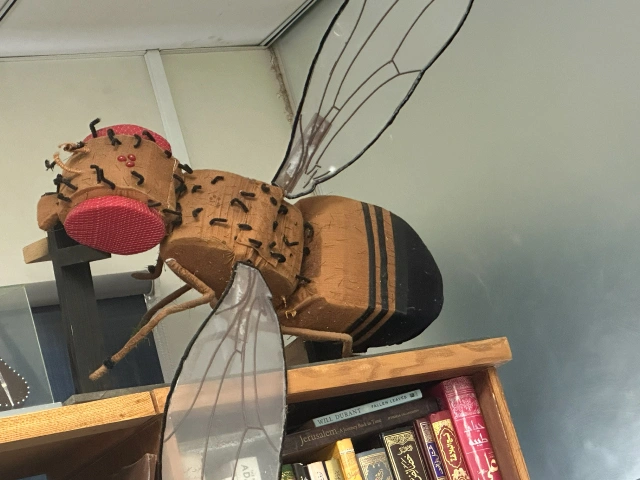
Known scientifically as Drosophila melanogaster, the fruit fly has helped researchers understand how genes are inherited, how bodies develop, how biological clocks work and how diseases emerge. According to Professor Dr Mushtaq Hussain, around 60 per cent of its genetic material has similarities to that of humans, while counterparts of approximately 75 per cent of known human disease-related genes can be found in the fly.
This means that a creature small enough to sit unnoticed on a piece of fruit can help scientists investigate some of humanity’s most complex medical questions.
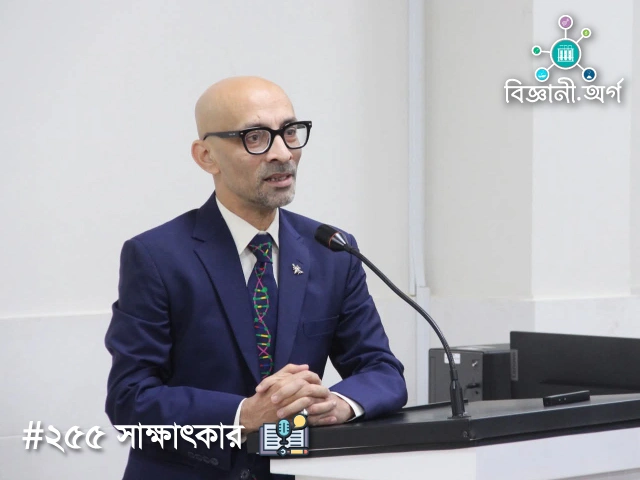
At Dow University of Health Sciences in Karachi, Pakistan, Dr Hussain has built much of his scientific career around this extraordinary organism. A professor of biotechnology and former principal of Dow College of Biotechnology, he leads research involving genetics, infectious-disease control, traumatic brain injury, congenital heart disease and emerging technologies such as artificial intelligence.
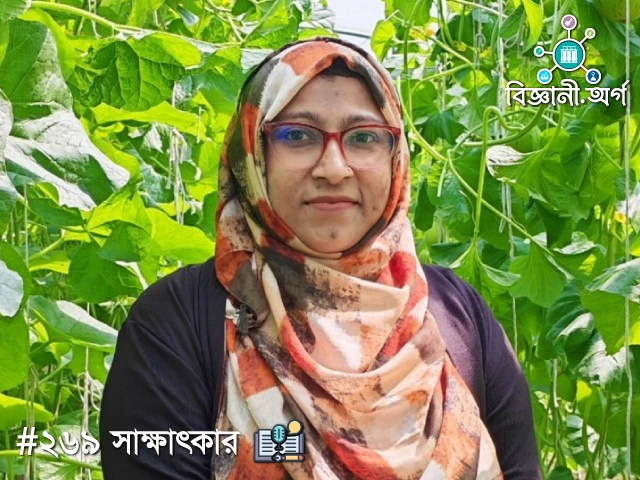
During an interview and laboratory tour organised by Biggani.org, Dr Hussain reflected on his journey from an underserved neighbourhood of Karachi to leading research institutions in Pakistan and the United Kingdom. He also discussed the challenges facing scientists in developing countries, the changing nature of biotechnology and the importance of choosing a career based on genuine curiosity rather than temporary market demand.
He described Biggani.org—a youth-led initiative connecting scientists with students across Bangladesh, Pakistan and beyond—as a promising platform for both established researchers and young people considering scientific careers. He hoped that such initiatives would become “an inspiring beacon” for those who want to take science and research seriously.

A childhood in Lyari
Dr Hussain was born in 1978 and spent the first two decades of his life in Lyari, one of Karachi’s most historically marginalised neighbourhoods.
Lyari has long been associated with economic hardship, limited infrastructure and social instability. Yet it has also produced generations of athletes, artists, educators and professionals who have challenged the assumptions often attached to disadvantaged communities.
Dr Hussain completed his early education and matriculation there before gaining admission to D. J. Science College, one of Karachi’s most respected educational institutions. He later studied microbiology at the University of Karachi, completing an MSc that he described as broadly equivalent to a present-day undergraduate degree under the current system.
His first professional experience was in school teaching. Although education would remain an important part of his life, he soon realised that the conventional school environment was not where he wanted to build his career.
He was drawn instead to the laboratory—to the process of asking questions for which no answer yet existed.
He joined the Centre of Excellence in Marine Biology as a research associate. Six months later, he received an offer from the Dr A. Q. Khan Institute of Biotechnology and Genetic Engineering. From there, his career took him through several of Pakistan’s major research institutions, including the International Centre for Chemical and Biological Sciences, the Pakistan Council of Scientific and Industrial Research and Aga Khan University.
A scholarship from Dow University eventually enabled him to pursue doctoral studies in the United Kingdom. At the University of Glasgow, he completed a PhD in genetics, genomics and systems medicine.
Genetics examines individual genes and their inheritance. Genomics looks more broadly at the full genetic information of an organism. Systems medicine goes a step further by studying the human body as an interconnected network rather than as a collection of isolated organs.
During his time in the United Kingdom, Dr Hussain also spent periods at Lancaster and Cambridge. He later returned to Pakistan and rejoined Dow University as a research associate. He became an assistant professor in 2015 and was promoted to professor in 2021, when he also took on the leadership of Dow College of Biotechnology.
Why he returned to Pakistan
For many South Asian researchers, completing a doctorate abroad presents a difficult decision: remain in a country with stronger research infrastructure or return home to work within a more constrained scientific system.
Dr Hussain had opportunities to remain in the United Kingdom or seek a career elsewhere. His scholarship, however, included a bond requiring him to serve in Pakistan for five years after completing his PhD.
Yet obligation was only part of the reason he returned.
In Pakistan, he said, he gained research independence earlier than he might have abroad. A young scientist working in Europe or North America may spend years under the direction of a senior principal investigator before receiving the funding, institutional position and authority needed to establish an independent research programme.
In Pakistan, Dr Hussain found that he could select his own questions, build his own projects and develop a laboratory around his scientific interests much sooner.
“I personally feel that in Pakistan, I find much more freedom in conducting the studies I want to conduct,” he explained.
He acknowledged that many scientists from Pakistan and Bangladesh do not return after studying overseas. At the same time, he emphasised that a significant number of his own colleagues had returned and were contributing to research and education in their home country.
For Dr Hussain, returning was not simply a sacrifice. It gave him the opportunity to become an independent scientist and to help create the type of research environment that younger researchers in Pakistan need.
Why scientists study fruit flies
Much of what researchers know about human biology has come from experiments involving “model organisms”—species that can be studied in laboratories to reveal biological processes shared across different forms of life.
Mice are among the best-known model organisms, particularly in medical research. However, they are expensive to breed and maintain. They require specialised facilities, trained staff, significant space and carefully regulated care.
Fruit flies offer a very different set of advantages.
They are inexpensive to maintain, occupy little space and reproduce rapidly. Dr Hussain explained that fruit flies reach reproductive maturity within hours and that a single pair can produce roughly 100 to 200 offspring over a period of about 10 days.
That speed is enormously valuable in genetics.
Genetic research often depends on observing how a trait moves from one generation to the next. If scientists want to understand whether a particular gene influences eye colour, heart development, behaviour or vulnerability to disease, they need to study large numbers of offspring across multiple generations.
A slow-breeding animal may require months or years to produce enough data. Fruit flies allow researchers to conduct many generations of experiments within a relatively short period.
Their biological simplicity is also deceptive. Although humans and fruit flies look nothing alike, many of the basic instructions controlling cell growth, organ development, metabolism and neurological function are evolutionarily conserved.
In other words, nature often reuses the same fundamental biological machinery in very different organisms.
Dr Hussain noted that hundreds of human diseases have been modelled in Drosophila. Research involving the fruit fly has also contributed to several Nobel Prize-winning discoveries, demonstrating how an apparently insignificant insect became central to the history of genetics.
Using bacteria to control mosquito-borne disease
One of the most promising projects in Dr Hussain’s laboratory involves a bacterium called Wolbachia.
Wolbachia is an endosymbiotic bacterium, meaning that it lives inside the cells of another organism and forms a close biological relationship with its host. It occurs naturally in many insects, including some fruit flies.
Dr Hussain’s team isolated Wolbachia from Drosophila and successfully cultivated it in the laboratory.
The bacterium has attracted international attention because of its potential role in controlling mosquito-borne diseases. When introduced into certain mosquito populations, Wolbachia can interfere with reproduction. In some combinations, a mosquito carrying the bacterium that mates with an uninfected mosquito may fail to produce viable offspring.
Some strains of Wolbachia can also make it more difficult for viruses such as dengue or Zika to multiply inside a mosquito. If the virus cannot reproduce effectively in the insect, the mosquito becomes less capable of transmitting the infection to humans.
The approach is known as biological control, or biocontrol.
Traditional mosquito control often relies on insecticides. Although chemical control can be effective, it may also affect other organisms, create environmental concerns and become less useful as mosquitoes develop resistance.
A Wolbachia-based strategy attempts to use the mosquito’s own biology against the diseases it carries. Instead of repeatedly spraying an entire environment, scientists release mosquitoes carrying a bacterium that can reduce disease transmission or alter reproduction within the local population.
For countries regularly affected by dengue, malaria and other vector-borne diseases, such research could have enormous public-health significance.
Why identical head injuries can have different outcomes
Another major project in Dr Hussain’s laboratory examines traumatic brain injury, commonly known as TBI.
A traumatic brain injury occurs when a sudden impact damages the brain. It may result from a road accident, a fall, a workplace incident, military combat or a contact sport such as boxing or rugby.
One of the most difficult questions in brain-injury medicine is why apparently similar injuries can produce radically different outcomes.
Two individuals may receive blows of comparable intensity. One may recover with limited long-term effects. The other may die, develop permanent disability or experience severe neurological damage.
Dr Hussain believes that part of the explanation may lie in genetic variation.
Human beings share most of their DNA, but small genetic differences can influence how our bodies respond to stress, inflammation, tissue damage and healing. Some people may possess biological characteristics that protect brain cells after an injury. Others may be genetically more vulnerable to swelling, bleeding or degeneration.
To investigate this possibility, Dr Hussain’s team collects wild-type fruit flies from different areas of Karachi. Because these fly populations come from different environments, they contain natural genetic variation.
The researchers expose the flies to controlled traumatic injury using a specialised device. They then compare survival, recovery and other biological responses across the different groups.
The aim is to identify genetic markers associated with better or worse outcomes.
In the future, such findings could help researchers understand why certain individuals face greater risks in contact sports or high-impact occupations. Dr Hussain suggested that the knowledge could have applications in military settings, where some personnel may be more biologically vulnerable to repeated head trauma.
Any eventual use of genetic information in employment, sport or military selection would, however, raise serious ethical questions. Genetic risk must never become a justification for discrimination, loss of privacy or unfair exclusion. Scientific capability and ethical responsibility would have to develop together.
For now, the fruit-fly model offers a controlled way to investigate the basic biology behind very different responses to similar injuries.
Modelling congenital heart disease
Dr Hussain’s laboratory is also using fruit flies to investigate congenital heart disease.
A congenital disorder is present from birth. In congenital heart disease, the structure or function of the heart develops abnormally before a child is born.
To understand how particular genes contribute to these disorders, the research team uses technologies including CRISPR and RNA interference.
CRISPR is often described as a pair of molecular scissors. It allows scientists to target a specific section of DNA and modify it. The comparison is not perfect, but it is similar to locating a particular sentence in a very large book and carefully changing one word.
RNA interference, or RNAi, works differently. Rather than permanently rewriting the DNA, it reduces or blocks the activity of a selected gene.
It can be compared to using a dimmer switch. The electrical system remains in place, but the amount of output is reduced.
By switching certain genes off, reducing their activity or modifying them in fruit flies, researchers can observe changes in the insect’s heart structure and function. If the same genes have comparable roles in humans, these experiments may reveal how congenital heart defects develop and where future treatments could intervene.
The fly’s heart is far simpler than the human heart, but many of the molecular instructions involved in development are shared. This allows scientists to investigate fundamental mechanisms quickly and at relatively low cost.
Understanding how vaccines are designed
Vaccine hesitancy and misinformation remain major public-health challenges across South Asia. One common claim is that wealthy countries distribute free vaccines in developing countries primarily to experiment on local populations.
Dr Hussain said he had not seen credible evidence supporting such a general claim.
To understand why, he argued, people first need a basic understanding of how vaccines are developed and how different vaccine platforms work.
In one conventional approach, a virus or other pathogen is weakened so that it loses its ability to cause serious disease while retaining features that the immune system can recognise.
The process resembles a training exercise.
Instead of confronting the body with the full threat of an active disease, the vaccine introduces a harmless or weakened version, or a recognisable component of the pathogen. The immune system responds by producing antibodies and memory cells.
If the real pathogen appears later, the immune system is no longer encountering it for the first time. It has already learned what to look for and can respond more quickly.
Modern vaccine technologies include mRNA vaccines. These do not contain a complete active virus. Instead, they deliver a temporary set of genetic instructions that enables the body’s cells to produce a harmless fragment resembling part of the pathogen.
The immune system recognises that fragment as foreign and begins building a defence.
A useful analogy is a wanted poster. The immune system does not need to capture the criminal in advance. It needs an accurate image that teaches it whom to recognise.
The mRNA itself does not remain in the body permanently. Once the instructions have been used, it is broken down through normal cellular processes.
Dr Hussain explained that bioinformatics and artificial intelligence can accelerate the design of these molecular instructions. Researchers can use computers to analyse pathogen sequences, identify useful targets and design candidate molecules much faster than was previously possible.
He referred to an online example in which an individual without formal biotechnology training attempted to use AI to design an mRNA-based treatment for a dog with cancer. The example illustrated how accessible design tools are becoming.
However, designing a molecule on a computer is not the same as producing a safe and effective treatment. A proposed vaccine or therapy must still undergo laboratory validation, preclinical testing, carefully controlled human trials, manufacturing-quality assessments and regulatory review.
Dr Hussain rejected the idea that the global distribution of COVID-19 vaccines was necessarily evidence of a conspiracy. Initial trials were conducted in countries including the United Kingdom and the United States before vaccines were distributed more widely, including to Pakistan.
He described vaccines as one of the great achievements of modern medicine and pointed to their historic role in preventing or controlling major infectious diseases.
The cost of conducting science
Scientific curiosity may begin with a question, but research cannot continue without money.
For Dr Hussain, inadequate funding is one of the largest obstacles facing researchers in Pakistan.
Biotechnology experiments require specialised chemicals, reagents, laboratory consumables and equipment. Many of these items are imported. This increases costs and often creates long delays.
A research team in a well-funded institution may order a chemical and receive it within days. In Pakistan or another developing research system, the same item may require complicated procurement procedures, foreign-currency payments, customs clearance and months of waiting.
During that time, an experiment may stop completely.
Research funding also needs continuity. A laboratory cannot build a long-term programme if financial priorities change every few years.
Dr Hussain recalled that Pakistan’s Higher Education Commission made substantial investments in higher education and research between 2002 and 2007. He believes that later declines in funding, combined with changes in academic incentives, have weakened research quality.
One of his strongest concerns is the growing emphasis on publication numbers.
When universities judge researchers primarily by how many papers they publish, science can become a numerical competition. The system rewards volume rather than originality, reliability or social value.
A researcher may produce several weak papers instead of spending years answering one genuinely important question.
Such incentives have contributed to the rise of predatory journals—publications that collect fees from authors while providing little or no meaningful peer review. They imitate the appearance of legitimate scientific journals but fail to apply the quality-control processes on which credible science depends.
For research systems in Pakistan, Bangladesh and other developing countries, the lesson is clear: increasing the research budget is essential, but funding must be connected to quality, integrity, training and long-term impact.
How artificial intelligence is changing biotechnology
Artificial intelligence is already transforming vaccine development, drug discovery, agriculture and biological data analysis.
Its greatest advantage is not that it “thinks” like a scientist, but that it can analyse extremely large and complicated datasets more quickly than a human team.
Dr Hussain offered a simple agricultural example.
Imagine testing 50 different combinations of fertilisers on a field. The results may be influenced by soil chemistry, temperature, rainfall, timing, plant variety and the proportions of each fertiliser.
Looking at the raw results, the best combination may not be obvious.
An AI model can process the dataset, search for hidden relationships and identify the combination most likely to produce an optimal result. A task that might otherwise require repeated experiments over many years could be narrowed down much more quickly.
The same principle applies to drug discovery.
Scientists may begin with millions of chemical compounds that could potentially interact with a disease-related protein. Testing every compound in a laboratory would be extraordinarily expensive and time-consuming.
AI can predict which compounds are most promising. Researchers can then focus their physical experiments on a much smaller group of candidates.
This does not eliminate the scientist.
An AI-generated prediction is not experimental proof. The machine can recommend possibilities, but researchers must still test those possibilities, examine unexpected results and determine whether a finding is biologically meaningful.
The future of biotechnology is therefore likely to depend on a partnership: high-quality data, intelligent computational tools and scientists capable of asking the right questions.
Building a career in biotechnology
Students considering biotechnology often struggle to choose among research, teaching, pharmaceutical work, environmental science and other industries.
Dr Hussain believes that professional requirements have changed significantly over time.
In earlier decades, secondary education might have been sufficient for many stable jobs. Later, undergraduate degrees became the standard. In advanced scientific careers today, a master’s degree or PhD may be necessary, particularly for those seeking independent research or university positions.
Yet qualifications alone are not enough.
Students also need practical skills, sustained focus and a clear understanding of what kind of work they genuinely enjoy.
Biotechnology offers routes into pharmaceutical manufacturing, medical diagnostics, food science, agriculture, genetic testing, environmental management and healthcare technology.
Environmental biotechnology, for example, includes bioremediation—the use of microorganisms, plants or biological processes to remove pollutants from soil and water.
Teaching and academic research remain important paths, but stronger connections between universities and industry can give students additional opportunities.
At Dow College, Dr Hussain and his colleagues have run projects financed by industrial partners. Students hired as research associates gain direct experience working on real scientific and commercial problems. Some later move into full-time industry positions.
Such programmes help close the gap between what students learn in classrooms and what employers need in laboratories, factories and technology companies.
Do not choose a career only for its “scope”
Dr Hussain’s most personal advice to young people is also his most direct: do not build your life around the temporary popularity of a profession.
Students across South Asia are often encouraged to choose subjects with the greatest “scope”—a term commonly used to mean job availability, salary potential or social status.
But what appears secure today may be very different in five years.
Artificial intelligence is currently attracting enormous attention because it is associated with rapid growth and new employment opportunities. Yet the technology itself may eventually automate many of the tasks now performed by people entering the field.
Choosing a career only because it appears financially promising can therefore be risky.
More importantly, Dr Hussain argued, it can produce a life of dissatisfaction.
“If you do something you don’t like, you won’t excel,” he said. “You will be mediocre.”
A person who is genuinely fascinated by experiments, unanswered questions and scientific discovery may find meaning in research even when the financial rewards are lower than those available in business.
Science offers a different kind of satisfaction: the experience of discovering something that was previously unknown, solving a difficult problem or producing knowledge that may one day improve human life.
Dr Hussain said he wanted to reach the end of his life with the satisfaction of knowing that he had done what he genuinely wanted to do.
His advice is not that every student should become a scientist. It is that every student should think seriously about the work that gives them energy, curiosity and purpose.
Preparing for admission to a leading university
There is no single formula for gaining admission to a highly ranked university.
Different institutions value different qualities. One programme may prioritise innovation, while another may seek applicants with experience in a highly specialised field.
Dr Hussain therefore advises students to begin by identifying the university, department or laboratory they genuinely want to join.
They should examine its research themes, read the work of its faculty members and understand the technical skills that the laboratory needs.
A student interested in infectious-disease genetics, for example, may strengthen an application by learning molecular biology, bioinformatics, statistical analysis or insect genetics.
Attending scientific conferences can also be valuable. Conferences allow students to meet researchers, ask questions and understand how scientific communities operate.
A strong undergraduate research project—and, where possible, a credible publication—can significantly improve an application. However, the quality of the work matters more than simply having one’s name attached to a paper.
Universities are not only looking for certificates. They are looking for evidence that an applicant understands the field, has developed relevant skills and is capable of contributing to serious research.
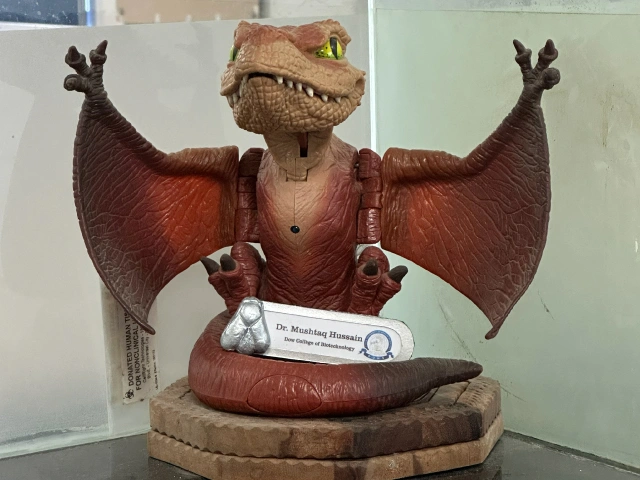
Inside a laboratory of fossils, bones and flies
After the interview, Dr Hussain guided the visitors through a collection that placed modern genetic science beside the deep history of life on Earth.
Among the specimens were fossils estimated to be hundreds of millions of years old, preserved between layers of rock.
One was a trilobite, an extinct marine arthropod commonly associated with the Cambrian period. Trilobites once occupied ancient seas long before dinosaurs appeared.
The collection also included fossil material from extinct cephalopods—the broader group that includes modern squid, octopuses and nautiluses.
A nautilus specimen demonstrated the distinctive spiral shell that has made the animal a familiar example of ancient marine body design.
The biological collection included a monkey cerebellum. The cerebellum is the region of the brain involved in balance, movement coordination and fine motor control. Dr Hussain explained that one of his doctoral students had worked with the specimen.
He also displayed bones collected from animals including a shark, crocodile, cat and monkey. A large white specimen was identified as a whale vertebra.
Human skeletal material included a skull, a femur—the long bone of the thigh—and part of the pelvis.
By comparing human and monkey bones, Dr Hussain showed both their similarities and their structural differences. Humans and other primates share an evolutionary history, but their skeletons have adapted to different patterns of movement, posture and weight distribution.
The visitors also examined a preserved snake named “Alexa,” producing a mixture of curiosity and apprehension among the students.
Life inside the Fly Lab
In the Fly Lab, the research team demonstrated how fruit flies are prepared for examination.
Because the insects move quickly, researchers first anaesthetise them temporarily. Ice or carbon dioxide can be used to immobilise the flies without immediately killing them.
Once the flies stop moving, researchers can examine them under a microscope and separate males from females.
The laboratory also contains incubators that maintain a carefully controlled temperature and regulate the flies’ circadian rhythm.
A circadian rhythm is the internal biological clock that helps organisms respond to the cycle of day and night. Humans experience it through patterns of sleep, alertness and hormone production. Fruit flies also follow daily biological rhythms that affect movement, feeding, reproduction and gene activity.
Researchers must control light and temperature because changes in these conditions can alter experimental results.
Another device in the laboratory was a two-dimensional clinostat, used to simulate some aspects of microgravity.
Microgravity is the condition experienced by astronauts in orbit, where objects appear nearly weightless. A clinostat slowly rotates a biological sample so that the direction of gravity continually changes relative to the organism.
It does not remove Earth’s gravity, but it prevents the sample from experiencing a constant gravitational pull in a single direction. This allows scientists to study how cells or organisms respond to conditions resembling aspects of spaceflight.
Using fruit flies in such equipment could help researchers investigate how reduced gravitational signals affect muscles, nerves, development, behaviour and gene expression.
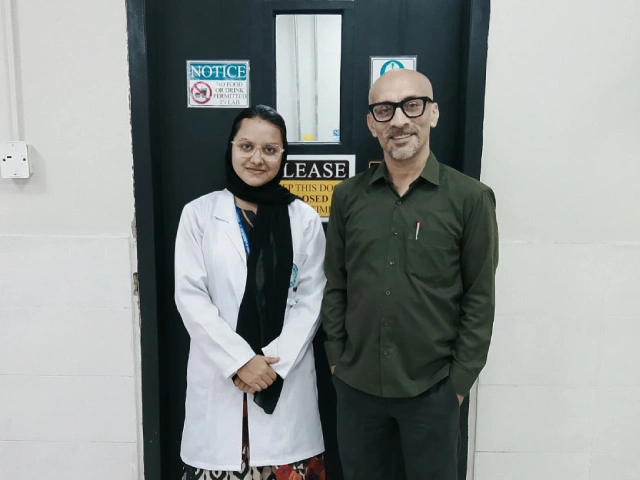
Dr Aisha Abdullah, curator of the Fly Lab, also introduced visitors to the biotechnology department and its facilities. The laboratory tour showed that scientific education does not need to remain confined to lectures and textbooks. Fossils, skeletons, living model organisms and experimental instruments can turn abstract ideas into experiences that students can see and remember.
A small organism and a much larger scientific vision
The most striking feature of Dr Mushtaq Hussain’s work is not simply the organism he studies. It is the scale of the questions he asks through it.
Why do two individuals respond differently to the same injury?
Can a naturally occurring bacterium help control mosquito-borne disease?
How does a congenital heart disorder begin at the level of a gene?
Can artificial intelligence reduce years of trial and error in biological research?
What happens to a living organism when the constant influence of gravity is disrupted?
These questions begin in a laboratory in Karachi, but their relevance is global.
Dr Hussain’s journey—from an underserved neighbourhood in Lyari to research institutions in Glasgow, Lancaster and Cambridge, and ultimately back to Pakistan—also challenges the idea that scientific excellence can emerge only from wealthy countries or privileged backgrounds.
The difficulties are real. Researchers in developing nations face funding shortages, delayed imports, fragile institutions, inconsistent policies and academic systems that sometimes reward quantity over quality.
Yet meaningful science can still grow in such environments when researchers are given independence, young people are trained carefully and curiosity is treated as a national resource.
Dr Hussain’s story offers an especially important message to students across Pakistan, Bangladesh and the wider Global South.
A future scientist may be sitting today in an ordinary classroom, in a neighbourhood far from a famous university, without access to an advanced laboratory. What matters at the beginning is not the size of the institution, but the willingness to ask questions and keep searching for answers.
If a two-millimetre fruit fly can reveal clues about hundreds of human diseases, then scientific potential should never be judged by outward size, social background or geographical origin.
Sometimes the smallest subjects lead to the largest discoveries.
🔗 Profile Links
📧 Email
💼 LinkedIn
🎓 Google Scholar
📘 Facebook
Watch the video of Professor Mushtaq Hussain’s interview on YouTube at the link below: 👇👇👇








Leave a comment