


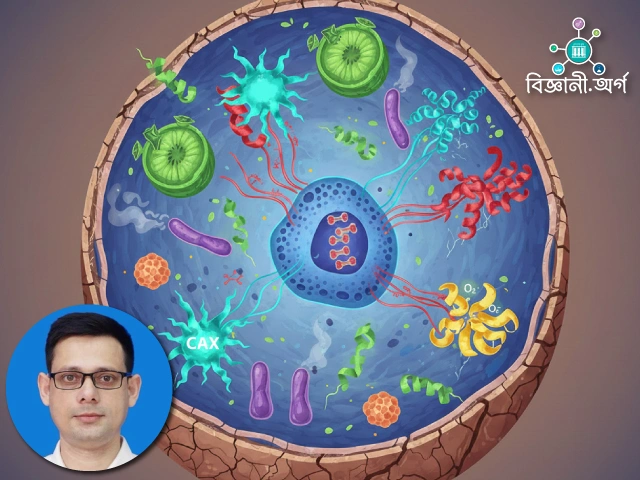
Dr. Ripon Sikder, Deputy Program Director (Seed), PARTNER, BADC, Dhaka
Email: [email protected]

Plants, being sessile organisms, are continually exposed to various environmental challenges, including drought, salinity, heat waves, heavy metals, nutrient imbalances, and pathogen attacks. All the stresses disrupt cellular metabolism and diminish crop productivity. Despite these uneven calamities, plant survival depends on a sophisticated biochemical regulatory system known as redox homeostasis.
The underlying mechanisms that enable this resilience
Inside plant cells, redox homeostasis is a key system that helps plants survive by keeping a balance between harmful oxidative stress and helpful signals for adaptation.
Reactive Oxygen Species: Dual Roles in Plant Physiology
Metabolic processes in plant cells, like photosynthesis and respiration, naturally create reactive oxygen species (ROS), such as:
- Superoxide radicals (O₂⁻·)
- Hydrogen peroxide (H₂O₂)
- Hydroxyl radicals (·OH)
- Singlet oxygen (¹O₂)
Under optimal conditions, plants maintain ROS levels at a static level. But during drought, salinity, heat, heavy metals, or nutrient problems, ROS levels rise sharply.
Excess ROS can cause:
- Lipid peroxidation
- Protein oxidation
- DNA instability
- Membrane disruption
This condition, called oxidative stress, can severely impair plant growth and reduce yields.
Recent research shows that ROS are not always harmful. In the right amounts, they act as signals, turning on stress-response genes, affecting hormone pathways, and starting protective actions.
The main challenge for plants is not to eliminate ROS, but to maintain a balance. Redox homeostasis makes this possible.
The Redox Machinery: How Plants Maintain Balance
Plants maintain redox balance through a network of antioxidants, including enzymes and non-enzymes.
The Enzymatic Defense Core
Key enzymes include:
- Superoxide dismutase (SOD) – converts superoxide radicals into hydrogen peroxide
- Catalase (CAT) – breaks down hydrogen peroxide into water and oxygen
- Ascorbate peroxidase (APX) – fine-tunes hydrogen peroxide detoxification
- Glutathione reductase (GR) – maintains the reduced glutathione pool
These enzymes work together in the ascorbate–glutathione cycle, one of the most important systems for maintaining redox balance in plant cells.
Non-Enzymatic Antioxidants
Plants also rely on powerful antioxidant molecules such as:
- Ascorbate (Vitamin C)
- Reduced glutathione (GSH)
- Tocopherols
- Carotenoids
- Phenolic compounds
These molecules directly neutralize ROS and help to maintain cell structure and stability.
Compartmentalized Control: A Sophisticated Cellular Network
Redox regulation is spatially organized across cellular compartments:
- Chloroplasts manage photosynthetic redox balance.
- Mitochondria regulate respiratory electron flow.
- Peroxisomes detoxify hydrogen peroxide.
- The nucleus interprets redox signals to modify gene expression.
By organizing these processes across different cell parts, plants can respond to stress in specific areas while maintaining overall system stability.
Redox Signaling: Connecting Stress to Gene Regulation
Redox changes influence plant hormone pathways, such as:
- Abscisic acid (ABA) during drought
- Salicylic acid (SA) in defense responses
- Ethylene under stress-induced senescence
- Jasmonates in stress adaptation
Redox-sensitive transcription factors (including NAC, WRKY, and bZIP families) respond to oxidative signals, enabling plants to reprogram gene expression under stress conditions.
So, redox homeostasis acts as a link between environmental changes and plant adaptation.
Why Redox Homeostasis Matters for Bangladesh and Beyond
For countries like Bangladesh, where agriculture faces:
- Coastal salinity intrusion
- Heat stress during reproductive stages
- Erratic rainfall patterns
- Nutrient-use inefficiencies
Enhancing redox buffering capacity can:
- Improve nitrogen use efficiency
- Protect photosynthetic machinery
- Reduce yield loss under stress
- Stabilize production systems
For researchers, this opens pathways for:
- Identifying redox-based molecular markers
- Breeding stress-resilient cultivars
- Designing smarter nutrient management strategies
- Developing redox-targeted biostimulants
For policymakers, investment in stress physiology research strengthens frameworks for climate-resilient agriculture and supports long-term food security strategies.
Beyond Detoxification: A Systems Biology Perspective
Redox homeostasis is now seen as more than just a detox system. It is recognized as a central part that connects:
- Energy metabolism
- Hormonal signaling
- Nitrogen assimilation
- Developmental programming
- Stress memory mechanisms
Future research should take a more integrated approach. By combining gene expression, metabolite analysis, and whole-plant trait studies, scientists can better understand how redox systems work across the entire plant and support stress adaptation.
Conclusion
Redox homeostasis determines how plants respond to stress. When this balance is maintained, plants can protect their cells and continue growing under drought, salinity, or heat. When the balance is lost, oxidative damage increases and crop performance declines.
Understanding and improving redox balance may help develop climate-resilient crops and support more sustainable food systems in the future.







Leave a comment