


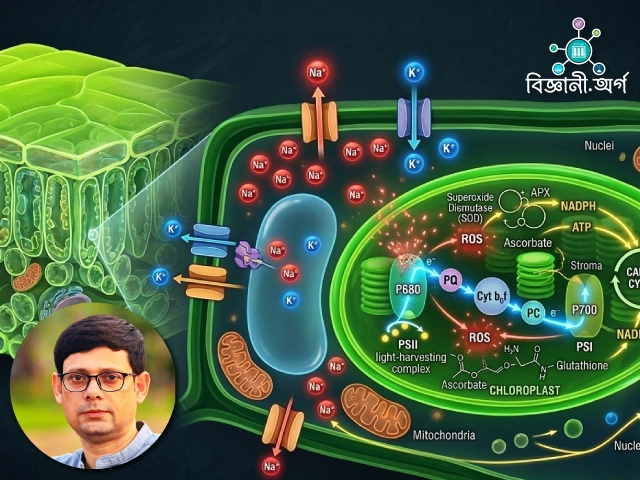
Salinity stress, a common environmental problem in agriculture worldwide, has a significant impact. Salt accumulation affects over 20% of the world’s irrigated land (FAO, 2022), a figure that is increasing due to climate change, poor irrigation practices, and seawater intrusion. Plants subjected to elevated salinity levels initially encounter osmotic stress, followed by ionic toxicity. These two primary stresses compromise cellular metabolism, thereby impeding the functionality of the photosynthetic apparatus, which is essential for plant growth. Ion homeostasis and PSII resilience are critical for survival, alongside a range of other physiological responses. Photosystem II (PSII) and ion homeostasis are two crucial biological processes that improve plant resilience under salinity stress.
Recent findings highlight a compelling interaction between these two systems, illustrating how plants synchronize ion management with photosynthetic stability to adapt to saline environments.

Ion Homeostasis: The Initial Protective Mechanism
In response to increased soil salinity, plant roots absorb sodium (Na⁺) and chloride (Cl⁻) ions, potentially causing cellular imbalance. Elevated Na+ concentrations subsequently interfere with potassium (K+) uptake; K+ is crucial for enzyme activation, protein synthesis, and stomatal function. Consequently, maintaining an appropriate K+/Na+ ratio is essential.
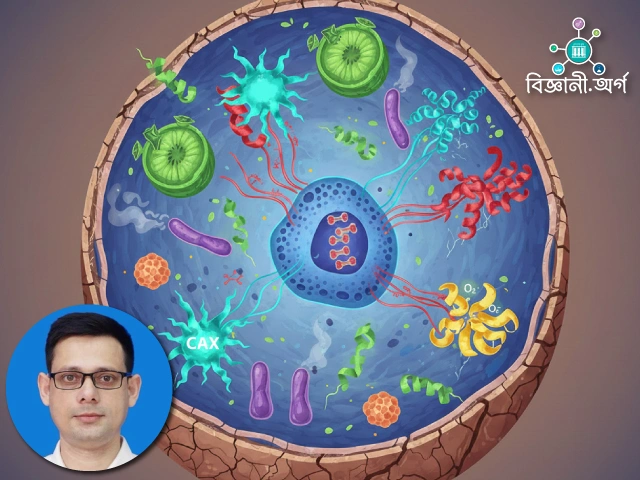
- Plants use several methods to maintain this balance. For example, ion transporters such as SOS1 (Salt Overly Sensitive 1) help to remove excess Na⁺ ions from the cytoplasm.
- NHX antiporters help to keep Na+ levels low inside vacuoles, which reduces the negative effects of sodium. HKT transporters impede Na+ entry into shoots, hence safeguarding photosynthetic tissues.
- Proline and glycine betaine serve as osmoprotectants that safeguard proteins and membranes from osmotic stress. The regulation of ions is an energy-dependent process, typicallypowered by photosynthesis. This represents the initial connection between ion homeostasis and PSII: when photosynthesis is not constant, the energy required for ion transport diminishes.
Photosystem II: The Green Engine That Can Be Broken
Photosystem II is the part of chloroplasts that lets light-driven electron transport begin. It is found in the thylakoid membranes. It breaks apart water molecules, releasing oxygen and activating electrons that drive the photosynthetic process. But PSII is quite sensitive to stress. Under saline conditions:
- High quantities of Na+ damage the structure of chloroplasts, which breaks down thylakoid membranes. Reactive oxygen species (ROS) accumulate, leading to the destruction of the D1 protein, a crucial element of photosystem II (PSII).
- A drop in chlorophyll fluorescence properties, especially the Fv/Fm ratio, shows that photochemical efficiency has gone down. Plants counteract these negative effects using antioxidant mechanisms.
- Enzymes like superoxide dismutase (SOD) and peroxidase (POD) help neutralize reactive oxygen species (ROS). At the same time, non-enzymatic antioxidants, such as carotenoids, help to remove excess energy.
- The consistent production of ATP and NADPH, which supports ion transporters, depends on a stable Photosystem II (PSII). Therefore, the stability of PSII is crucial.
The Crosstalk: A Two-Way Conversation
The interplay between ion homeostasis and PSII is reciprocal, creating a dynamic relationship.
1. Ion Regulation Shields PSII
Plants regulate potassium (K⁺) levels, thereby ensuring the proper functioning of enzymes and chloroplasts. By sequestering Na⁺ in vacuoles, cytoplasmic toxicity is reduced, which indirectly protects PSII proteins. When ions are distributed evenly, the amount of reactive oxygen species (ROS) produced decreases. This, in turn, reduces the oxidative stress on photosystem II (PSII).
2. PSII Helps Keep Ions in Balance
The energy from PSII-mediated electron transport powers proton pumps and ion exchangers. ATP generated in chloroplasts powers SOS1 and NHX transporters, which help to keep Na⁺ out of the cell. Similarly, NADPH plays a crucial role in maintaining membranes stability and ion channels through its involvement in antioxidant processes. This mutual aid highlights the interconnected nature of how organisms respond to stress. Plants that struggle to coordinate these processes often suffer from salt stress. In contrast, those with effective communication show remarkable resilience.
Case Studies and Research Findings
Research on halophytes, including Salicornia and Atriplex, offers substantial evidence of this relationship. These species can maintain elevated K⁺/Na⁺ ratios and PSII efficiency even under high salinity. Conversely, glycophytes, such as rice and wheat, which are sensitive to salinity, experience rapid declines in PSII activity when ionic equilibrium is disrupted.
- Molecular studies have revealed important genes that connect these two processes. For example, in rice, increased expression of HKT1;5 helps maintain PSII stability under salt stress by removing Na⁺ ions.
- Transgenic plants exhibiting enhanced D1 protein turnover demonstrate improved PSII recovery and more effective ion regulation.
- Employing CRISPR to modify ion transporter genes is emerging as a viable strategy for developing crops with improved ion-PSII integration.
Implications for Agriculture
These findings hold considerable significance for agricultural progress.
- Breeding initiatives, for example, can now identify genotypes that demonstrate both efficient ion transport and resilient PSII functionality.
- Biotechnology offers the potential to combine transporter engineering with the fortification of antioxidants.
- Agronomic strategies, such as the application of silicon or the use of osmoprotectants, represent two avenues for improving ion balance and bolstering PSII resilience.
Addressing salinity stress requires a comprehensive, system-wide approach. It’s not enough to just look at ion balance or photosynthesis separately; the important thing is how they work together.
Final Assessment
Plants face a precarious equilibrium under salinity stress. Ion homeostasis prevents cellular accumulation of detrimental substances, while Photosystem II provides the energy and reducing equivalents essential for cellular survival. The interplay between these two processes, mutual support during periods of stress, determines the threshold between survival and collapse.
Consequently, investigations into this interaction are aiding scientists in the development of resilient crops capable of thriving in saline environments. As salinization increasingly affects global agricultural zones, understanding this interaction is crucial to scientific understanding and food security. Enhancing the coordination between chlorophyll-based photosynthetic processes and the concealed regulators of ionic balance is essential.
Dr. Ripon Sikder
, Deputy Program Director (Seed), PARTNER, BADC, Dhaka


Leave a comment