


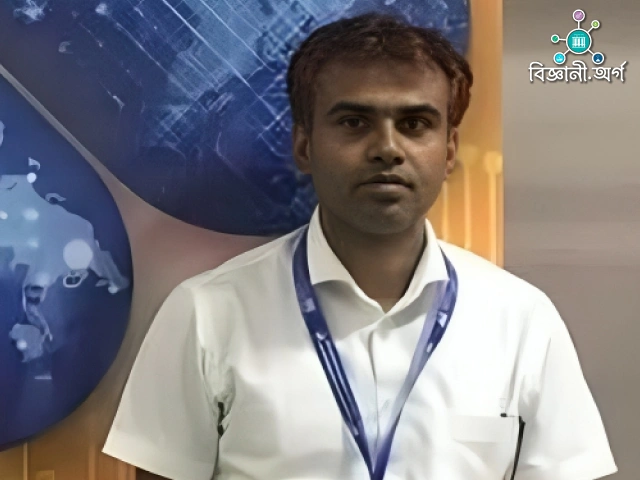
Below is a refined, tighter international feature profile (~NYT-style narrative). It is written so that Professor A
On a recent evening, an online gathering organized by Biggani.org connected young Bangladeshi students with a scientist working thousands of miles away. On their screens appeared Professor Abdul Hamid, a faculty member in the Department of Information Technology at King Abdulaziz University in Jeddah, Saudi Arabia.

As the conversation unfolded, two words repeatedly surfaced in his reflections: responsibility and gratitude.
Despite a successful international career spanning several countries and research institutions, Professor Hamid often returns to the memory of where his journey began—a small riverside village in Bangladesh.
His story illustrates a broader narrative shared by many scientists from developing nations: a journey shaped by curiosity, persistence, and a desire to apply knowledge for the benefit of society.
A Rural Beginning and an Awakening to Academic Possibility
Professor Hamid grew up in Sonatola village in the Santhia region of Pabna district, a rural part of Bangladesh where childhood was defined by open fields, fishing in nearby rivers, and a simple village life.
Science was not yet a clearly defined ambition.
That changed when he was admitted to Rajshahi Cadet College, one of Bangladesh’s most competitive secondary institutions. There he encountered a level of academic excellence that reshaped his perspective.
“I realized very quickly that being a ‘good student’ in Bangladesh has no ceiling,” he said.
Surrounded by classmates who would later become physicians, engineers, and scholars, he developed a deeper sense of intellectual ambition. That realization became the starting point of a long academic journey.
After completing his undergraduate studies at the International Islamic University Malaysia, he returned to Bangladesh and spent several years teaching. But the pursuit of research soon called him abroad again.
He went on to earn both his Master’s and Ph.D. in South Korea, launching an international academic career that would take him across Asia and the Middle East.
His professional path includes academic roles in South Korea, Saudi Arabia, and Bangladesh, where he taught at several universities including Green University, American International University-Bangladesh (AIUB), and the University of Asia Pacific.
During his time at the University of Asia Pacific, he worked closely with the late Professor Jamilur Reza Choudhury, one of Bangladesh’s most influential engineers and educators. This period proved formative for his research direction.
Bringing the Bengali Language into the Digital Era
One of Professor Hamid’s most notable contributions lies in the field of Bangla language computing, a branch of artificial intelligence and computational linguistics focused on enabling computers to understand and process the Bengali language.
Although Bengali is spoken by more than 250 million people worldwide, it has historically been underrepresented in advanced digital technologies.
The challenge is not simply technological—it is linguistic.
English, for example, follows a relatively rigid sentence structure. Bengali, however, involves flexible word order, contextual meanings, and phonetic ambiguities. Words with nearly identical pronunciation can carry entirely different meanings, making automated interpretation far more complex.
To address these challenges, Professor Hamid and his collaborators began developing machine-learning approaches that allow computers to interact more naturally with the language.
Their work includes research in several areas of natural language processing (NLP):
- Speech-to-text systems capable of transcribing spoken Bengali
- Text retrieval and semantic search technologies
- Automated spell correction and linguistic error detection
- Machine learning models designed specifically for Bengali linguistic patterns
To support this work, Professor Hamid helped establish an Advanced Machine Learning Laboratory in Bangladesh, where students and researchers explore the intersection of language, artificial intelligence, and data science.
“We want computers not just to display Bengali text,” he explains.
“We want them to understand Bengali the way humans do.”
For a language spoken by hundreds of millions, this work represents an important step toward digital inclusion in the global technology ecosystem.
Artificial Intelligence and the COVID-19 Pandemic
Professor Hamid’s research also extends into broader applications of artificial intelligence.
During the COVID-19 pandemic, his team sought to address a question that policymakers around the world struggled to answer:
How can governments balance public health protection with economic stability during a pandemic?
Because real-world data was difficult to access due to privacy restrictions and inconsistent reporting, the team created a simulated model of a country with a population of 10,000 people.
Using reinforcement learning algorithms, the model simulated infection spread, recovery rates, mortality, and economic activity under different lockdown scenarios.
The AI system evaluated multiple strategies, including lockdown cycles lasting two weeks, one month, forty-five days, or sixty days.
Their findings suggested that neither continuous lockdown nor unrestricted reopening produced optimal results. Instead, cyclical lockdown strategies—alternating between restrictions and reopening—often maintained a more sustainable balance between health outcomes and economic activity.
The research was published in Scientific Reports, a journal from the Nature Publishing Group, highlighting how artificial intelligence can assist policymakers by simulating complex social scenarios before implementing real-world policies.
Applying Machine Learning to Agriculture and Medicine
Building on these experiences, Professor Hamid’s research group has expanded its work into areas with direct societal impact.
In precision agriculture, machine learning models analyze plant images to identify crop diseases, classify plant types, and assess fruit quality. Such technologies could help farmers detect problems early and improve crop yields.
At the same time, his team is exploring medical imaging applications, including machine-learning models that assist in the early detection of diseases such as breast cancer through image-processing techniques.
These projects share a common objective: using advanced technology to improve human well-being in practical ways.
Advice to the Next Generation of Scientists
When students ask how to enter the field of artificial intelligence, Professor Hamid offers a clear answer.
“Before anything else, build a strong foundation in mathematics.”
Machine learning may appear to revolve around coding and software tools, he explains, but the real foundations lie in calculus, probability theory, and linear algebra.
Without understanding those concepts, students risk learning only the surface of artificial intelligence rather than its underlying principles.
More importantly, he encourages young researchers to see technology as more than a career path.
“Technology should not be limited to writing software for companies,” he says. “It can become a tool to solve real problems—whether in healthcare, agriculture, education, or public services.”
A Mathematical Vision for Social Welfare
Professor Hamid’s intellectual curiosity extends beyond technology itself to the broader challenges of global inequality and poverty.
In one of his recent research papers, he proposed a mathematical framework that treats charitable donations not as temporary relief but as structured economic investments.
Instead of distributing aid directly, donations could fund small local industries that create employment opportunities.
For example, establishing a small food-processing facility—such as a noodle factory—in a rural community could generate jobs for factory workers, drivers, and local vendors. Mathematical modeling could then estimate how long it would take for such initiatives to enable families to meet their essential needs, including food, education, and healthcare.
In this model, charity evolves into sustainable economic empowerment.
The idea raises a fundamental ethical question: how should societies distribute their growing wealth?
For Professor Hamid, the answer lies in designing systems where mathematics and economic planning help communities escape poverty permanently.
Science as Service to Humanity
After decades of teaching and research across multiple countries, Professor Hamid still identifies most strongly with two places: the classroom and the laboratory.
His original aspiration—to study deeply and guide students—has never changed.
What has grown over time is a broader sense of responsibility: responsibility to contribute to technological development, to support young researchers from Bangladesh, and to ensure that scientific knowledge ultimately benefits society.
In his view, science is not an isolated intellectual pursuit.
It is a human endeavor—one that must remain connected to the problems and aspirations of the people it serves.
For young scientists watching his journey from rural Bangladesh to global research institutions, the message is both simple and powerful:
Keep learning. Think deeply. And remember that knowledge carries responsibility—not only to yourself, but to society as a whole.







Leave a comment